
Paksat-MM1 Satellite Explained: Pakistan’s Space Leap in 2025–2026
A complete guide to Paksat-MM1’s launch, capabilities, operations, and impact on Pakistan’s digital ecosystem.
Paksat-MM1, Pakistan’s advanced multi-mission satellite, marks a major milestone in the nation’s space journey. Launched in 2024 and fully operational by 2025, it replaces the aging Paksat-1R, expanding Pakistan’s broadband, broadcasting, and navigation capabilities. This guide dives deep into the satellite’s background, technical specs, services, and future projections for 2025–2026.
Launch and Background
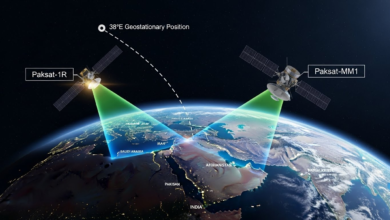
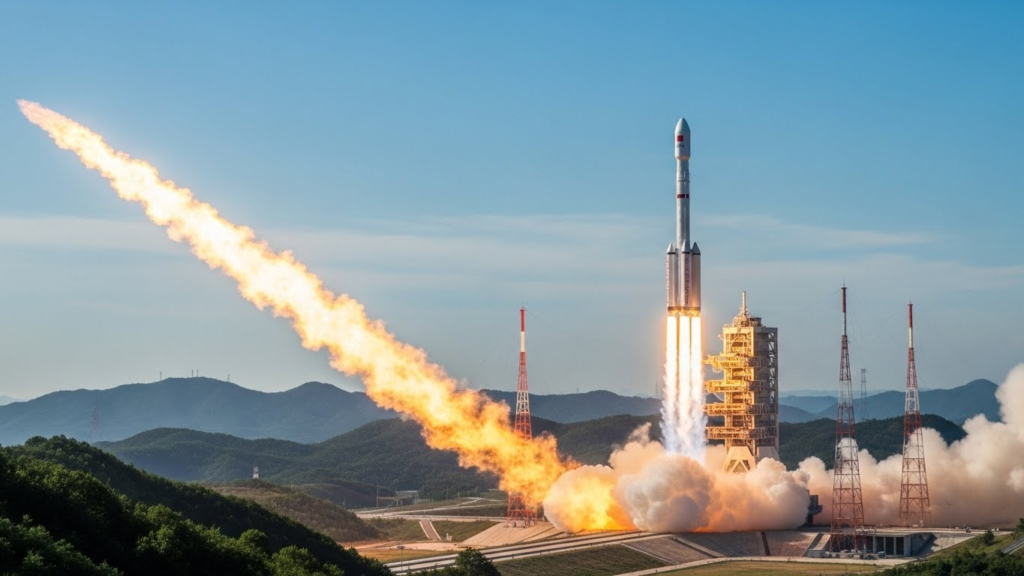
Paksat-MM1 was launched on May 30, 2024, from China’s Xichang Satellite Launch Center aboard a Long March 3B rocket. Initially named Paksat-MM1R as a replacement for the previous AsiaSat-4 satellite, it reached geostationary orbit at 38.2°E by August 2024. The satellite supports Pakistan’s Digital Pakistan and URAANPakistan Vision initiatives, bridging connectivity gaps in remote regions and facilitating e-commerce, education, and telemedicine.
Technical Specifications
Built on the DFH-4E platform, Paksat-MM1 is a high-throughput satellite (HTS) designed for durability and efficiency. Key specifications include:
| Parameter | Details |
|---|---|
| Orbital Position | 38.2°E (geostationary) |
| Launch Mass | 5,400 kg |
| Design Lifespan | 15 years (until ~2039) |
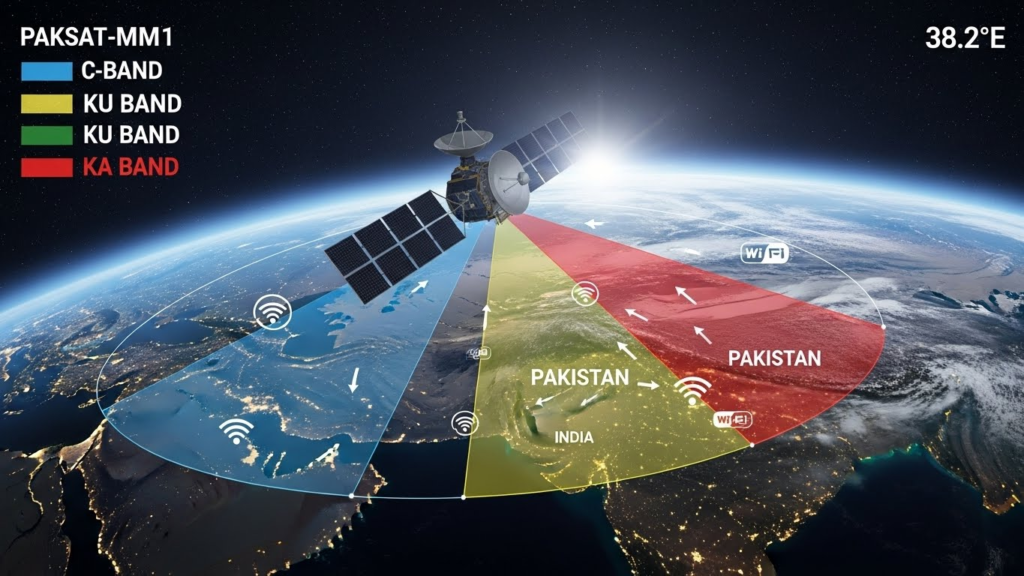
| Transponders | 48 (C, Ku, Ka, L bands) |
| Antennas | 9 |
| Beams | 11 fixed user beams + 3 gateway beams (Lahore, Karachi, Islamabad) |
| EIRP | Up to 55 dBW in Ku-band |
| Coverage | Pakistan mainland, Indian Ocean, Middle East, East Africa, parts of Europe |
| Modulation | DVB-S2, higher-order modulation for weather reliability |
The HTS design allows high-speed broadband, making Paksat-MM1 ideal for digital connectivity expansion across the country.
Capabilities and Services
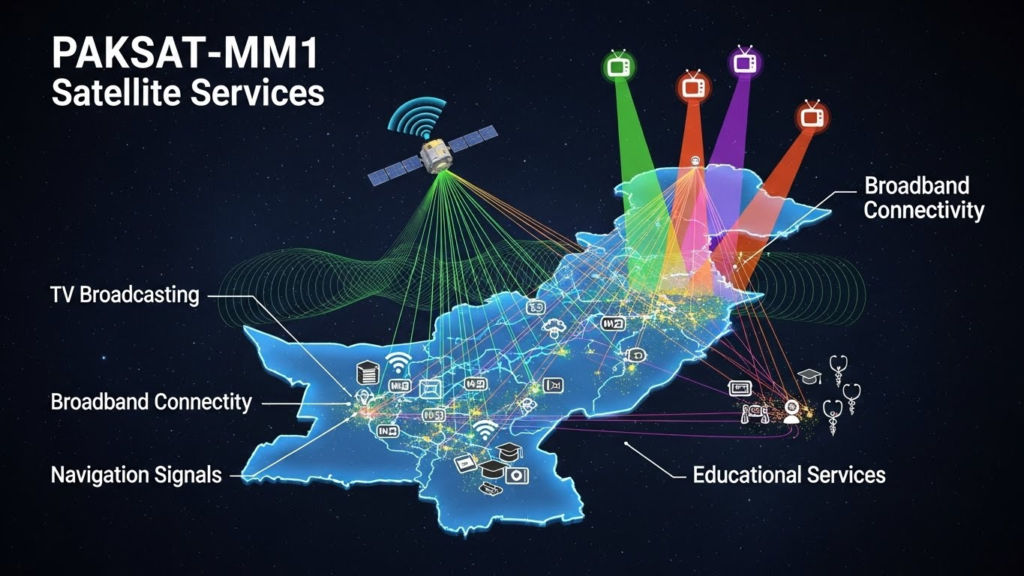
Paksat-MM1 supports multiple services:
- Broadcasting: FTA TV channels, HDTV, and radio across C/Ku bands.
- Connectivity: Broadband internet, VSAT, IP trunking, cellular backhaul, DSNG.
- Navigation: L-band SBAS for BeiDou system, aiding aviation and precision farming.
- Socio-economic support: Telemedicine, e-learning, e-commerce, 5G backhaul, disaster management.
Its multi-mission design ensures Pakistan’s communication, education, and business sectors are connected efficiently.
Current Status in 2025
By late 2025, Paksat-MM1 has replaced Paksat-1R across most services. It supports 240 million people via broadband and Earth observation satellite integration (EO-1).
Notable updates include:
- New channels added: PRESS TV HD, PTV National, HUM Network.
- Sports coverage: PTV Sports with ICC broadcast rights until 2027.
- Transponder updates: Frequencies ranging from 3707 H 3600 to 4172 H 28500 MHz for various channels.
C-band dishes (4–6 ft) with LNB 5150 MHz are required for reception; frequent rescans ensure updated channel access.
Future Outlook for 2026 and Beyond
In 2026, Paksat-MM1 will continue as the backbone of Pakistan’s satellite communication, completing migrations from Paksat-1R. Services will expand to include 5G backhaul, disaster management, and regional connectivity. Integration with Earth observation satellites like KS-1 will enhance climate monitoring, precision agriculture, and resource management. The satellite will also support expanding broadband coverage to rural and underserved areas, bridging the digital divide and enabling e-learning, telemedicine, and e-commerce growth nationwide. Long-term, Paksat-MM1 strengthens Pakistan’s space ambitions while remaining primarily civilian-focused, laying the groundwork for future multi-mission satellites, advanced communication networks, and potential collaboration in regional space initiatives. Its success will inspire further investment in space technology, research, and innovation.
Conclusion
Paksat-MM1 is not just a satellite—it’s a symbol of Pakistan’s technological progress. By enhancing communication, broadcasting, and navigation services nationwide, it plays a critical role in shaping the country’s digital and space future. Beyond its technical achievements, Paksat-MM1 represents a strategic step towards self-reliance in space technology, reducing dependency on foreign satellites for vital services. It empowers remote communities with internet connectivity, enabling access to online education, telemedicine, and e-commerce opportunities that were previously out of reach. Media and entertainment sectors also benefit, with high-definition broadcasting and live sports coverage reaching millions of households across Pakistan and beyond.
Moreover, Paksat-MM1 lays the foundation for future satellite projects, encouraging innovation in space science, engineering, and communication technologies within the country. Its integration with Earth observation satellites provides valuable data for agriculture, climate monitoring, and disaster management. In essence, Paksat-MM1 is a cornerstone of Pakistan’s journey towards becoming a digitally connected, technologically advanced, and space-capable nation.