
Satellite TV Piracy History: A Comprehensive Guide (2000-2025)
Satellite TV piracy has undergone significant transformations since the early 2000s. From smart card hacks to Internet Key Sharing (IKS) and illegal IPTV streaming, the industry has witnessed a cat-and-mouse war between hackers, corporations, and law enforcement. In this article, we will delve into the satellite TV piracy history, exploring key events, countermeasures, and the impact of technological advancements on the industry.
The Early Days of Satellite TV Piracy (2000-2005)
During the early 2000s, satellite TV providers like DirecTV, Dish Network, BSkyB, and Bell relied on smart cards to control access to their services. However, hackers quickly discovered weaknesses in these systems, leading to the development of smart card readers, glitchers, and programmers. These tools enabled pirates to read card memory, clone cards, modify Entitlement Control Messages (ECMs), and unlock premium channels permanently.
For more information on the satellite TV piracy history, check out our article on From Smart Card Hacks to IKS: A Brief History of Satellite TV Piracy (2000–2025). You can also learn about the future of satellite piracy and how it is evolving with technology.
Black Sunday: The First Major Counterattack
In January 2001, DirecTV launched a countermeasure known as Black Sunday, which destroyed over 100,000 pirated cards overnight. However, pirates fought back with bootloaders to revive dead cards, marking the start of an ongoing arms race between hackers and corporations.

The Rise of Card Sharing (2005-2008)
By 2005, smart card security had improved, and pirates began to focus on card sharing instead of cloning. This involved using one legitimate smart card to serve dozens of receivers, with decryption data shared via local networks or the internet.
For a detailed analysis of the satellite TV piracy history, including the rise of card sharing, check out our article on The Hidden World of Satellite TV Encryption: From Smart Cards to Cardsharing.
How Card Sharing Worked
Card sharing allowed pirates to:
- Use one legitimate smart card to serve multiple receivers
- Share decryption data via local networks or the internet
- Emulate card responses on receivers

The IKS Revolution (2008-2020)
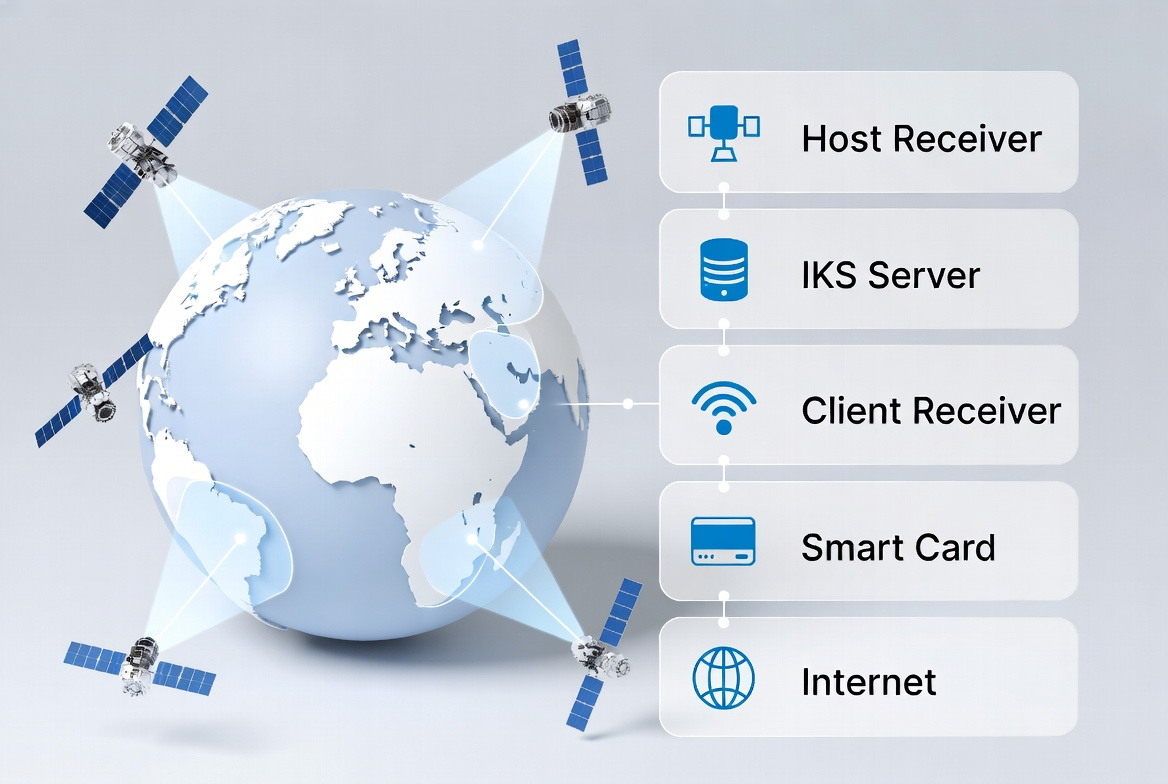
The next major leap in satellite TV piracy was the introduction of Internet Key Sharing (IKS). IKS servers used subscribed smart cards placed in data centers to generate real-time control words and distribute them globally over the internet.
For more information on the IKS revolution, check out our article on IKS vs IPTV Piracy: Why Satellite Card-Sharing Is Slowly Disappearing.
Global Impact and Abuse
IKS had a significant global impact, with:
- UK pubs streaming Sky Sports illegally for £10/month
- The infamous BeoutQ operation pirating major sports leagues
- Entire regions relying on IKS instead of legal subscriptions

The Shift to IPTV and Streaming Piracy (2020-2025)
By the 2020s, traditional satellite piracy was fading, and modern encryption systems introduced AES encryption, Trusted Execution Environments (TEE), and self-destruct mechanisms. At the same time, consumer behavior changed, and viewers moved to OTT platforms, with pirates following suit.
For a detailed analysis of the shift to IPTV and streaming piracy, check out our article on Piratkort Parabol: Global Decline of Satellite Piracy and Rise of Streaming.
The New Piracy Model
The new piracy model involves:
- Illegal IPTV apps
- Thousands of channels via internet servers
- Restreamed premium sports and movies
- Malware-infected Android TV boxes

Conclusion: A War That Never Truly Ended
The story of satellite TV piracy is not just about stealing signals — it’s a mirror of how technology, economics, and human ingenuity collide in the digital age. As of 2025, the battleground has shifted from satellites in orbit to servers, apps, and networks. While traditional satellite piracy is largely defeated, the broader fight against content piracy continues — now more complex, global, and digital than ever.
Stay up-to-date with the latest developments in satellite TV piracy and the evolving landscape of content protection with 10 Proven Satellite TV Channel Updates: 2025 and other informative articles on TechRetry.