
The Gray Market of IKS Receivers: How Cheap Satellite Boxes Fuel Piracy
How low-cost satellite boxes empower piracy, impact broadcasters, and persist in the shadow economy.
Satellite TV piracy has evolved with technology. IKS receivers—satellite set-top boxes legally sold as Free-to-Air (FTA) devices—are now widely available in gray markets. Originally intended for legitimate use, these devices are modified with pirated firmware, connecting to IKS servers to access premium channels for pennies. Priced as low as $20–$50, they have democratized piracy in regions like South America, India, MENA, and the Caribbean, contributing billions in annual losses to broadcasters.

What Are IKS Receivers and the Gray Market?
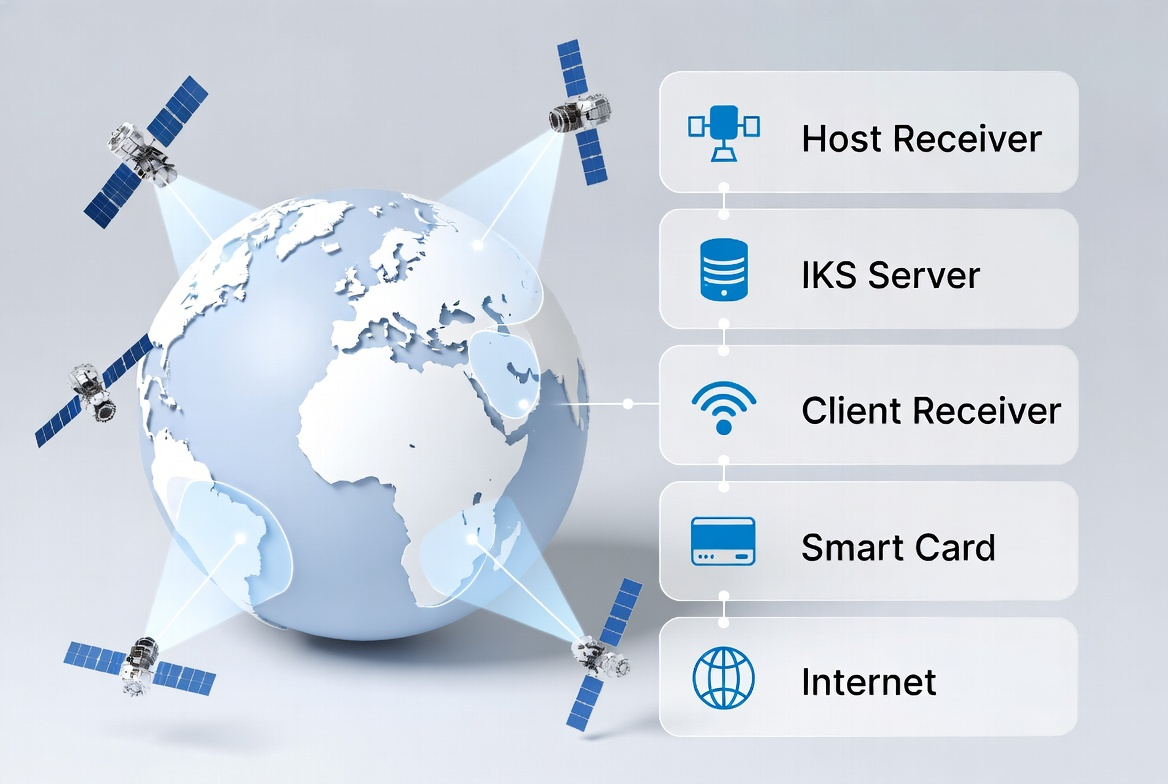
IKS Receivers like Dreambox, Pansat, Qviart, and Gosat models are designed for FTA satellite signals but are easily repurposed for piracy via custom firmware. Users flash these devices to connect with servers that share decryption keys, bypassing payments for channels such as premium sports, movies, and HD content.
Gray Market Dynamics:
- Sold as legal FTA receivers on Alibaba, eBay, Amazon, priced $20–$50.
- Underground forums provide pirated firmware (NCam, OSCam), enabling card sharing and IKS access.
- Sellers market “IKS free decoders” or “Biss Key CCCam TV Boxes” for global reach, especially targeting developing countries.

Historical Context
- 2000s: Receivers like Viewsat and Pansat popularized NagraVision hacks.
- 2010s: Card cloning declined; IKS networks dominated piracy.
- Gray Market Links: UK pubs in 2014 used cracked boxes to access Sky packages cheaply. Caribbean imports facilitated cross-border signal theft.
Image Prompt: “Timeline showing evolution of satellite piracy from 2000 to 2025”
Image Title: Evolution of Satellite Piracy
How Cheap Boxes Fuel Piracy
- Accessibility: Low cost allows mass adoption in regions like Brazil and India.
- Firmware Modifications: Users easily flash devices to bypass payments.
- Hybrid Boxes: DVB-S2 + IPTV boxes mix satellite and streaming piracy.
- Economic Incentives: Pirates resell modified boxes or subscriptions; some made fortunes from forum scripts.
- Annual Losses: Broadcasters lose an estimated $5.1 billion annually to piracy.

Technical Enablers
- Linux-based firmware (NCam/OSCam) supports key sharing.
- Underground communities provide continuous updates, keeping piracy active despite provider encryption upgrades like Nagra 3.
- Hybrid decoders in 2025 integrate IPTV, further eroding DTH dominance.
Impacts and Countermeasures
- Impacts: Facilitates large-scale piracy, disrupts revenue, and creates underground economies.
- Shift to IPTV: Satellite piracy declines as broadband internet expands, though hybrid boxes persist.
- Countermeasures: Providers deploy ECMs, lawsuits (Operation Decrypt), and AI detection.
- Legal Risks: DMCA violations, malware exposure, and fines threaten users, though enforcement is inconsistent.

Key Data Table
| Aspect | Description | Examples/Data | Impact |
|---|---|---|---|
| Devices | FTA boxes repurposed for IKS | Dreambox, Pansat; $20–$50 on Alibaba/eBay | Low cost enables mass piracy |
| Distribution | Gray market imports from China | Sold as legal FTA; flashed underground | Fuels black markets in pubs/NRIs |
| Regions | High in developing markets | Brazil, Caribbean | $5.1B global losses annually |
| Evolution | From 2000s hacks to 2025 hybrids | Nagra 3 upgrades; IPTV shift | Declining but persistent in niches |
| Risks | Legal and technical | Malware, fines, ECM takedowns | Deterrent for casual users |
Conclusion
The gray market of IKS receivers thrives by exploiting low-cost devices and user demand for cheap satellite content. These receivers make it easy for individuals in low-income regions to access premium channels without paying official subscription fees, fueling a self-sustaining piracy ecosystem. While IPTV and streaming platforms are gradually replacing traditional satellite piracy due to convenience, higher quality, and broader availability, gray market boxes still serve as a niche tool for unauthorized access, particularly in areas with limited broadband or where ethnic content demand is high.
Users of these devices face significant risks, including malware infections, exposure of personal data, and potential fines or legal action. In addition, modified boxes can be unreliable, with frequent downtime, firmware issues, or compatibility problems. For those seeking entertainment, investing in legitimate subscriptions or legal streaming services remains the safest and most dependable option, ensuring uninterrupted access while avoiding legal and cybersecurity hazards.