
Table of Contents
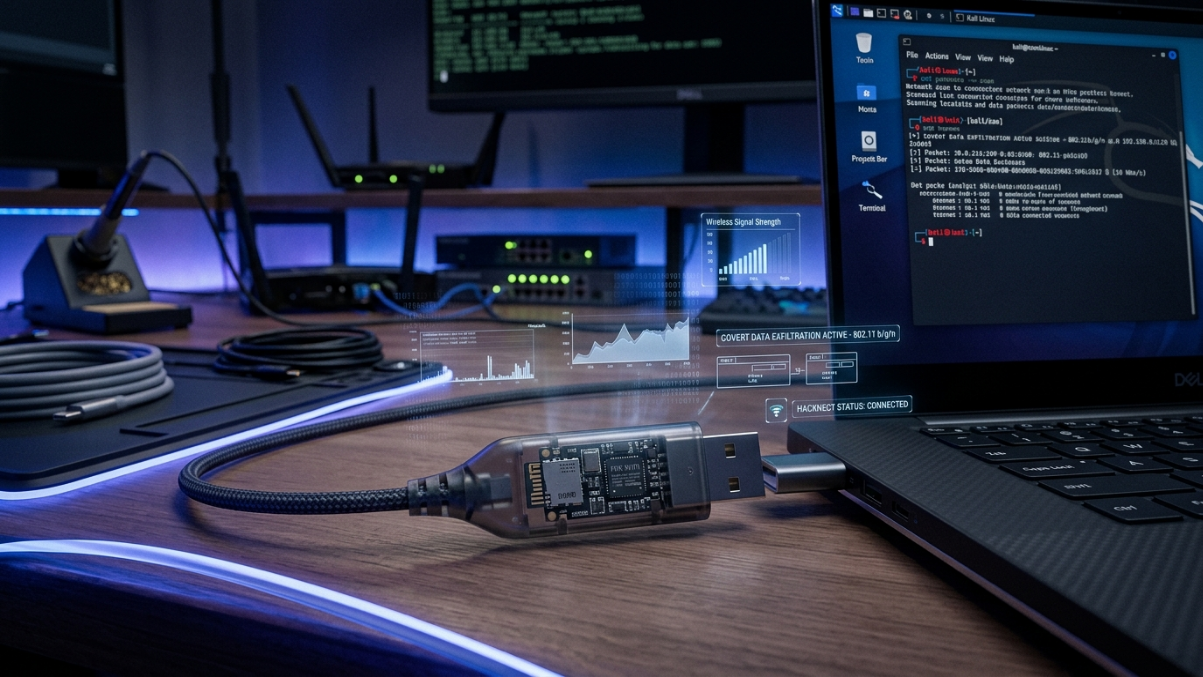
The Hacknect USB Cable is an advanced covert hardware platform designed for wireless automation, cybersecurity learning, and penetration testing. At first glance, it appears to be a completely ordinary USB cable. However, hidden inside its connector shell is a powerful microcontroller, wireless networking hardware, and expandable storage capabilities.
Developed by Nick Bild and introduced through a crowdfunding campaign, the Hacknect USB Cable has quickly attracted attention from cybersecurity professionals, ethical hackers, and hardware enthusiasts. Its stealthy design and powerful functionality make it one of the most interesting hardware security tools currently emerging in the 2026 landscape.
What Is the Hacknect USB Cable?
The Hacknect USB Cable is essentially a miniature embedded computer disguised as a regular USB cable. Unlike standard charging or data cables, it contains a fully functional wireless-enabled microcontroller capable of executing automated tasks and interacting with connected devices.
Its design resembles older covert hacking tools such as the O.MG Cable, but the Hacknect USB Cable expands beyond offensive security use cases. It supports wireless automation, maker projects, and remote control applications, much like how your smart plug is seriously underutilized for home automation tasks.
Because the hardware is fully concealed inside the USB connector, the cable looks almost identical to a standard USB accessory, making it extremely difficult to identify through visual inspection alone.
Core Hardware Specifications of the Hacknect USB Cable
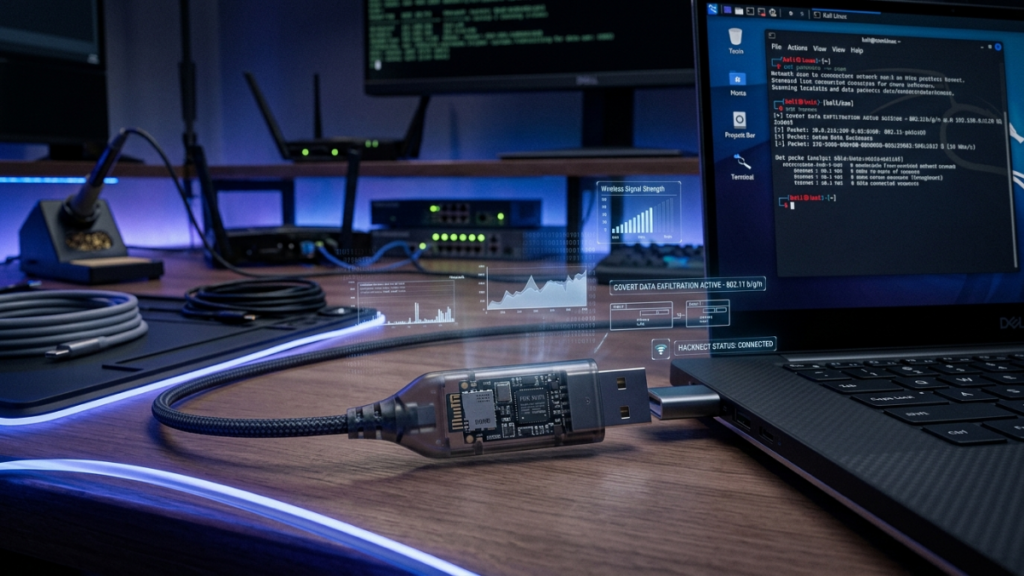
The Hacknect USB Cable packs an impressive amount of hardware into a compact connector housing, rivaling the complexity of modern productivity tools found in smartphones.
Wi-Fi Enabled Microcontroller
At the heart of the Hacknect USB Cable is a wireless microcontroller, typically based on ESP32-class hardware. This onboard MCU enables the cable to create its own Wi-Fi access point or connect to existing wireless networks to receive remote commands wirelessly.
Hidden microSD Card Storage
Another major feature of the Hacknect USB Cable is its concealed microSD card slot. This hidden storage capability allows the device to store payloads, log captured data, and operate independently from the host machine.
Stealth USB Form Factor
One of the most notable aspects of the Hacknect USB Cable is its covert design. The entire hardware platform fits directly inside a standard USB-A or USB-C connector shell. When connected to a computer, it behaves and appears like a normal charging cable.
Capabilities of the Hacknect USB Cable
The Hacknect USB Cable supports a wide range of cybersecurity and automation functions thanks to its ability to interact directly with USB data lines.
Keystroke Injection and BadUSB Functionality
For ethical hackers, the Hacknect USB Cable can operate similarly to a BadUSB implant. Once connected, the cable can impersonate a USB keyboard (HID) to automatically inject terminal commands, PowerShell scripts, and keyboard shortcuts at lightning speeds.
Remote Wireless Payload Triggering
Unlike traditional USB attack devices, the Hacknect USB Cable includes built-in Wi-Fi for real-time remote control. An operator can trigger specific commands dynamically from a nearby location, increasing flexibility during penetration testing scenarios.
Wireless Automation and Maker Applications
The Hacknect USB Cable is also a flexible automation platform. Potential applications include remote control of USB-connected hardware, wireless automation workflows, and IoT experimentation. This versatility makes it a powerful tool for developers.
Security Risks Associated With the Hacknect USB Cable
The emergence of devices like the Hacknect USB Cable highlights a critical cybersecurity principle: physical access often equals total access. Much like the hidden USSD design flaw that many users overlook, hardware vulnerabilities can be devastating.
Potential threats include unauthorized keystroke injection, malware deployment, and data exfiltration. Organizations that rely heavily on USB peripherals face increased exposure if proper device security policies are not implemented.
How to Protect Against Covert USB Implants
Security professionals use several defensive strategies to reduce the risk posed by hidden hardware implants like the Hacknect USB Cable.
Endpoint Detection and Response (EDR)
Modern EDR solutions can identify suspicious USB behavior. If a charging cable suddenly registers as a keyboard and begins typing, advanced security software will block the device immediately.
USB Data Blockers
For public charging stations, many users rely on USB data blockers, commonly known as “USB condoms.” These adapters allow power to pass through while physically disconnecting the data pins, ensuring the Hacknect USB Cable cannot communicate with your device.
Conclusion
The Hacknect USB Cable combines stealth hardware design, wireless connectivity, and USB-based automation into a compact platform. While it serves legitimate research purposes, it also highlights the growing risks of hidden USB implants.
As cybersecurity threats evolve, awareness and strict USB security policies remain essential defenses. For more information on the technical development of this tool, visit the official Hackster project page.