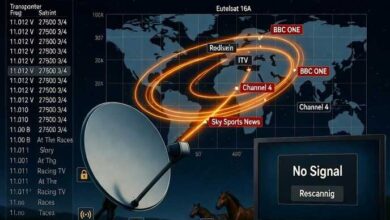
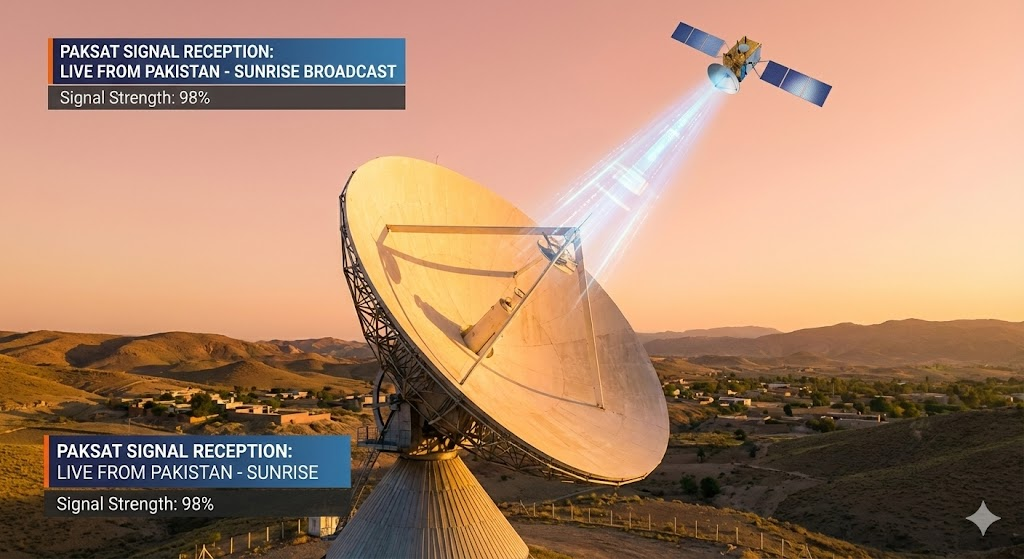
Satellite TV Update headlines are once again dominating the broadcast world, and this time the changes are impossible to ignore. In a single wave, dozens of popular television channels disappeared from major satellites across Africa, Europe, the Middle East, and Asia—leaving viewers confused, installers busy, and broadcasters quietly reshaping their future.
This article explains what really happened, why it matters, and what satellite TV viewers should expect next, using simple language and real-world context rather than technical noise.
Table of Contents
- The Satellite TV Update That Changed Everything
- Why So Many Channels Disappeared at Once
- Africa Hit Hard: Music & Entertainment Feeds Pulled
- Israel’s Massive Satellite Migration Explained
- Europe and Asia: Quiet but Important Exits
- Pakistan’s PAKSAT Update: Rare Good News
- What This Satellite TV Update Means for Viewers
- The Future of Satellite Broadcasting
- Final Thoughts: Adapt or Disappear
The Satellite TV Update That Changed Everything
This Satellite TV Update is not a routine frequency shuffle. It represents one of the largest coordinated satellite feed withdrawals in recent years.
Major broadcasters removed signals from:
- Intelsat
- Eutelsat
- SES
- AzerSpace
- Belintersat
- TürkmenÄlem
In many cases, the same channel left multiple satellites on the same day, a strong sign of strategic change rather than technical failure.
Why So Many Channels Disappeared at Once
The Cost Problem Behind Satellite Broadcasting
Satellite bandwidth is expensive. As broadcasters move toward:
- Fiber distribution
- IP delivery
- Encrypted regional feeds
Maintaining wide satellite coverage no longer makes financial sense.
This Satellite TV Update reflects broadcasters cutting legacy distribution paths to reduce long-term operational costs.
(External Source: Industry Authority / Broadcast Economics Research)
The End of Free Feeds
Many of the removed signals were contribution feeds, never meant for permanent public viewing. As monitoring became easier, broadcasters quietly closed these doors.
This is why so many feeds vanished without replacement frequencies.
Africa Hit Hard: Music & Entertainment Feeds Pulled
Channels Affected Across Multiple Satellites
This Satellite TV Update shows near-total satellite withdrawal of:
- MTV Base Africa
- BET Africa
- CBS Justice
- CBS Reality Africa
These channels left:
- Intelsat 20 & 36
- Eutelsat 36C & 36D
- SES-4 & SES-5
- AzerSpace 1
- Belintersat 1
This wasn’t random—it was systematic.
What African Viewers Should Know
- Channels are not shut down
- Distribution moved to controlled platforms
- Free-to-air access is largely gone
- Pay-TV operators may restore feeds internally
(Related Article on African Pay-TV Distribution Changes)
Israel’s Massive Satellite Migration Explained
A Planned Move, Not a Blackout
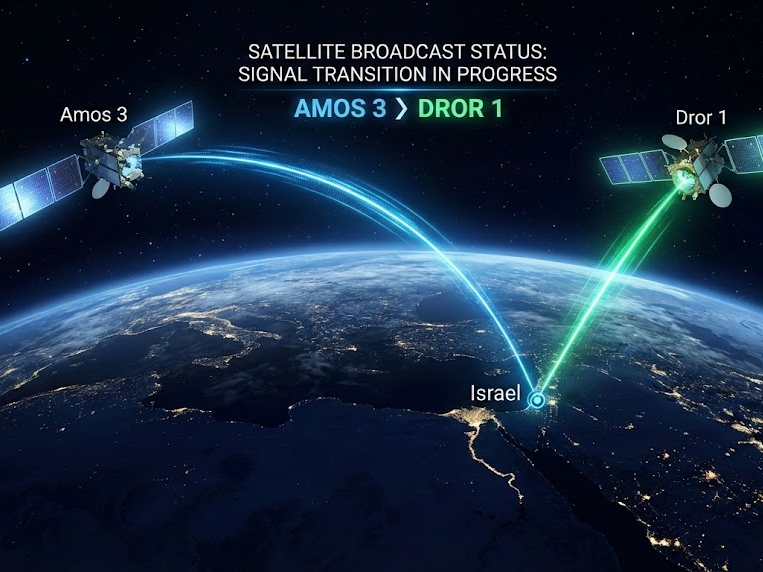
One of the most important parts of this Satellite TV Update is Israel’s clean transition from Amos 3 (4.1°W) to Dror 1 (4.0°W).
Over 20 YES platform channels moved in a synchronized operation.
Channels included:
- Keshet 12
- Reshet 13
- Kan 11
- Sport 1, Sport 5
- Yes Movies & Drama Networks
Why This Move Matters
- Amos 3 is aging
- Dror 1 offers better security
- Long-term national broadcast stability
This is how planned satellite evolution looks.
Europe and Asia: Quiet but Important Exits
European Changes
This Satellite TV Update confirms:
- Paramount Channel España leaving Astra 19.2°E
- Pop UK and Tiny Pop stopping broadcasts on Astra 28.2°E
- Vilayet TV exiting Hot Bird 13°E
These exits suggest platform consolidation, not channel failure.
Asia-Pacific Departures
Several Asian channels quietly left:
- Intelsat 20
- G-Sat 10
- AsiaSat 5
- Apstar-7
Including:
- Daystar TV
- Jaya TV network
- Arirang World
(Read About: AsiaSat – Asia’s Premier Satellite Operator)
Pakistan’s PAKSAT Update: Rare Good News
Not all news in this Satellite TV Update is negative.
New Additions on PAKSAT-1R
- Starlite TV
- Champion Kids TV
- Super Screen
Frequency Changes on PAKSAT-MM1
- VU TV Network migrated to new transponders
- Old frequencies permanently switched off
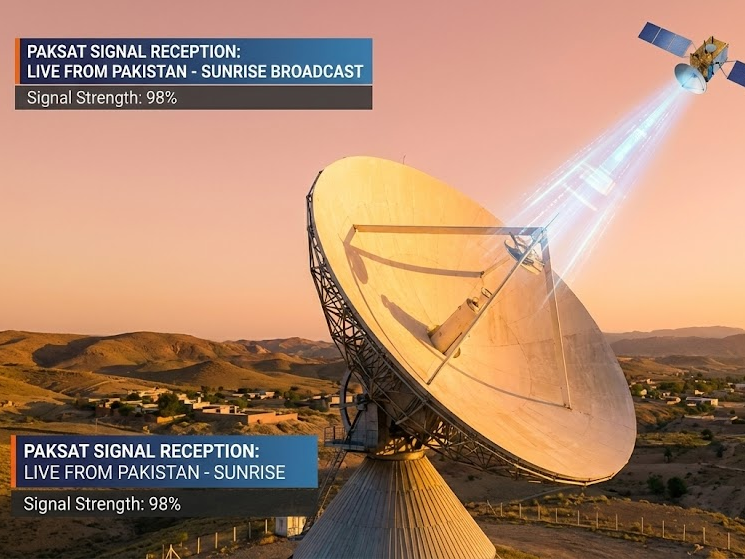
This shows Pakistan is still investing in satellite broadcasting, especially for education and local content.
What This Satellite TV Update Means for Viewers
For Free-to-Air Viewers
- Many feeds are gone permanently
- Rescanning will not help in most cases
- Expect fewer open signals in the future
For Pay-TV Subscribers
- Temporary blackouts possible
- Channels may return via internal feeds
- No action needed in most cases
(Internal Link: Related Article on How Pay-TV Signal Distribution Works)
The Future of Satellite Broadcasting
This Satellite TV Update confirms a clear trend:
- Fewer satellites
- Fewer free feeds
- More encryption
- More IP and fiber reliance
Satellite TV is not dying, but it is becoming tighter, controlled, and strategic.
Broadcasters are choosing efficiency over visibility.
Final Thoughts: Adapt or Disappear
This Satellite TV Update is a warning and a roadmap at the same time.
For viewers, it means adapting expectations.
For installers, it means staying informed.
For broadcasters, it means survival through modernization.
Satellite television is entering a leaner, smarter era—and only those who evolve will stay visible in the sky.