
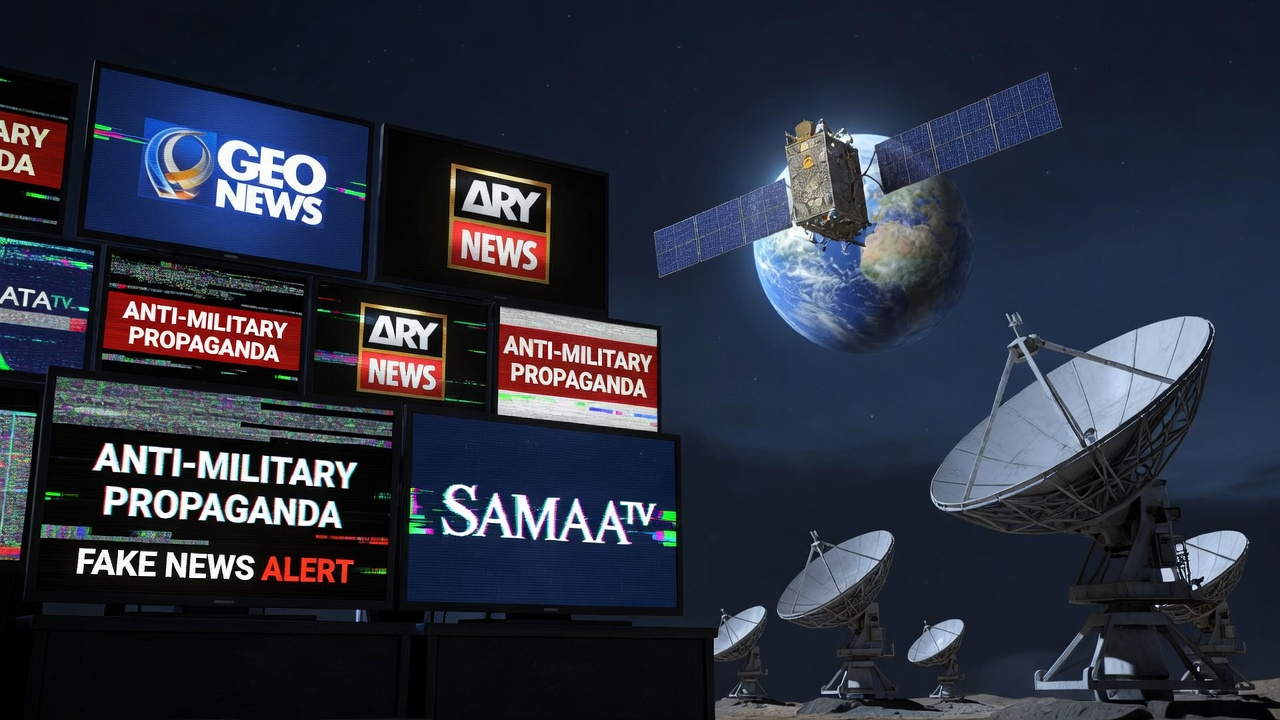
On March 1, 2026, Pakistan’s media landscape faced an unprecedented and highly sophisticated security breach that sent shockwaves through the national broadcasting industry. In what appeared to be a meticulously coordinated TV channel broadcast hack, several of the country’s premier satellite news networks—most notably Geo News, ARY News, and Samaa TV—saw their live transmissions abruptly intercepted by external actors.
This was not a localized technical glitch but a strategic compromise of the broadcast chain, marking a significant escalation in the digital threats facing Pakistan’s mainstream media. The breach effectively bypassed the internal security protocols of these media houses, targeting the very medium through which information is delivered to millions of households across the territory.
The breach occurred during the high-stakes 9 PM prime-time slot, a period of peak viewership shortly after Iftar when families nationwide gather to catch the day’s top headlines. Viewers across the country were left stunned and bewildered when regular news bulletins and professional graphics were suddenly replaced by unauthorized, rogue content. The hijacked feed featured a series of inflammatory anti-state slogans and highly controversial messaging allegedly linked to Mossad, creating an atmosphere of confusion and concern.
This strategic timing ensured maximum psychological impact, as the intruders exploited a moment of national focus to broadcast psychological warfare tactics. The incident has since sparked intense debate regarding the vulnerability of unencrypted satellite feeds and the urgent need for a more robust, military-grade defense infrastructure for national communication assets like PakSat-1R.
Timeline of the Satellite Signal Hijacking
- Date & Time: March 1, 2026, at 21:00 PKT.
- Affected Platforms: PakSat-1R (National Communication Satellite).
- Incident Duration: Several minutes of continuous interference before engineers regained control.
- The Content: The hijacked feed displayed scrolling text and graphics claiming that certain sectors of the state had “brought Pakistan to ruin,” alongside slogans referencing foreign intelligence agencies.
Official Response from Media Houses
The affected broadcasters moved quickly to distance themselves from the broadcast. Azhar Abbas, Managing Editor of Geo News, stated:
“Repeated hacking attempts were made on our PakSat transmission over the last 24 hours. This inappropriate message has no connection with our editorial policy; it is the work of anti-Pakistan elements.”
Similar high-priority alerts were issued by ARY News and Samaa TV, confirming that their internal servers remained secure and the compromise happened at the signal level.
Technical Analysis: How the “Uplink Override” Worked
Contrary to initial rumors of a software hack or a “server breach,” cyber security experts at HackRead and NCERT Pakistan suggest this was a classic Satellite Uplink Interference (Frequency Spoofing).
The Mechanics of the Attack:
- Frequency Matching: The attackers identified the exact frequency, polarization, and symbol rate used by the news channels on PakSat.
- Power Overpowering (EIRP): By using a high-gain ground station (uplink transmitter), the hackers sent a “rogue signal” that was significantly stronger than the legitimate one.
- Satellite “Capture”: Most commercial satellites, like PakSat, operate on a ‘Bent-Pipe’ architecture—they simply amplify and re-broadcast the strongest signal they receive.
- The Result: The satellite accepted the hackers’ stronger signal and broadcasted it to millions of domestic dishes, effectively “masking” the real news feed.
Note: While the Tamasha OTT app saw minor glitches due to the source feed being compromised, most web-based streams remained stable as they use different encoding paths.
National Security & Retaliation
The National Computer Emergency Response Team (NCERT) and PEMRA have initiated a high-level technical audit of PakSat’s security protocols. While speculation regarding foreign state-sponsored actors (including Indian or Israeli involvement) is high, no official attribution has been made.
In a digital counter-move, the “Pakistan Cyber Force” reportedly targeted Indian media infrastructure. Reports from hackread.com indicate that ABP News experienced a brief defacement displaying pro-Pakistan messages shortly after the Islamabad incident.
The Wake-Up Call: Lessons for Broadcast Security
This TV channel broadcast hack highlights a critical vulnerability in analog and unencrypted satellite transponders. Moving forward, experts recommend:
- Signal Authentication: Implementing digital signatures at the uplink level to ensure the satellite only accepts “authorized” signals.
- Carrier ID (CID): Mandating the use of DVB-CID to identify the source of any interfering signal immediately.
- Encryption: Shifting from “Free-to-Air” (FTA) clear streams to encrypted feeds for primary distribution to cable head-ends.
Final Verdict
The Pakistan satellite channels hack of 2026 is a stark reminder that in the age of hybrid warfare, the airwaves are just as vulnerable as the internet. The speed and scale of this attack suggest a high level of technical sophistication that necessitates a total overhaul of Pakistan’s broadcast security infrastructure.