
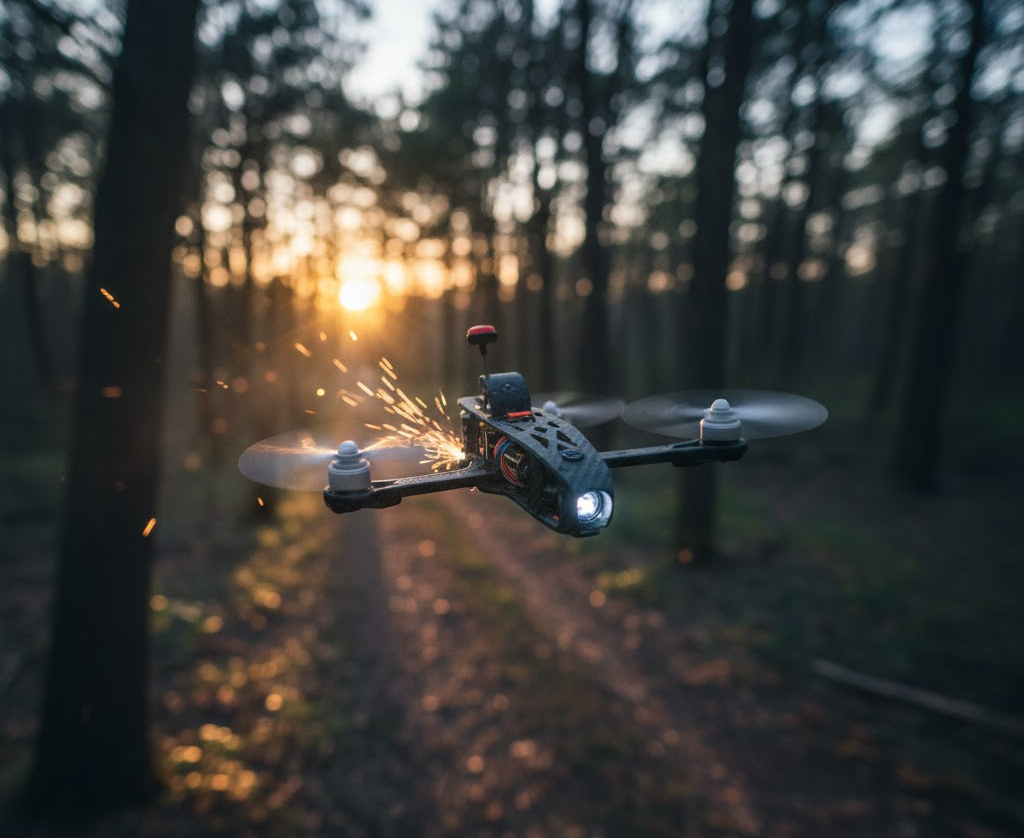
Beating the World Record for Fastest Flying Drone Once Again
When “Fast Enough” Is Never Enough
In the world of competitive drones, records don’t stand still for long.
Every time a team claims the title for the fastest flying drone, someone else is already in a workshop thinking, “We can go faster.”
Breaking a world speed record isn’t about luck or a single powerful motor. It’s the result of obsessive testing, calculated risks, and a deep understanding of physics. And when the record falls again, it’s rarely by accident.
This is the story behind how drone speed records are beaten — and why the process itself is just as impressive as the final number.
The Myth of “Just Add More Power”
From the outside, it’s easy to assume that breaking a drone speed record is simple:
- Bigger motors
- Bigger batteries
- Full throttle
In reality, that approach usually ends in instability, overheating, or catastrophic failure.
At extreme speeds, a drone becomes an aerodynamic system, not just a flying gadget.
Power matters — but balance matters more.
Aerodynamics: The Real Speed Multiplier
At record-breaking speeds, air resistance becomes the main enemy.
Competitive drone engineers spend countless hours refining:
- Frame shape to reduce drag
- Arm profiles that cut through air cleanly
- Minimal exposed wiring and components
Even tiny design changes can add or remove several kilometers per hour at top speed.
In high-speed drone engineering, clean airflow is everything.
Motors, ESCs, and the Art of Efficiency
More powerful motors don’t automatically mean more speed.
Engineers look for:
- Motors with optimal KV ratings for sustained velocity
- Electronic Speed Controllers (ESCs) tuned for high-frequency response
- Perfect voltage-to-weight ratios
The goal is efficient power delivery, not raw force.
A drone that wastes energy fighting heat or vibration will never hold a speed record.
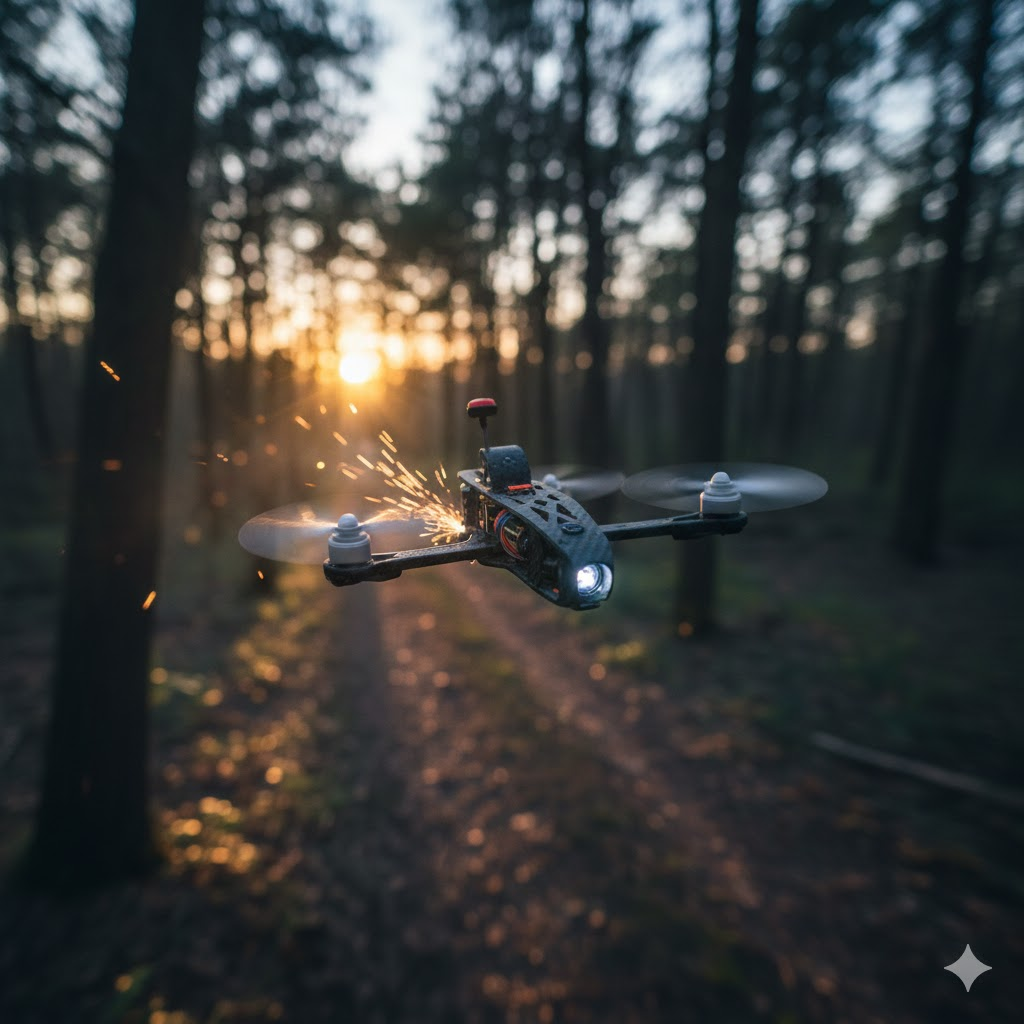
Flight Control at the Edge of Stability
At extreme velocities, even the smallest correction matters.
Flight controllers are carefully tuned to:
- Minimize oscillations
- React instantly without overcorrecting
- Maintain stability at full throttle
At record speeds, pilots aren’t “flying” in the traditional sense — they’re managing chaos.
One wrong input, and the attempt is over.
Materials Matter More Than You Think
Weight is the enemy of speed — but so is flex.
High-speed drones often use:
- Carbon fiber frames
- Reinforced motor mounts
- Precision-balanced propellers
Everything must be light, rigid, and reliable. A single structural failure at top speed can destroy months of work in milliseconds.
Testing, Failure, and Incremental Gains
No speed record is broken on the first attempt.
Teams go through:
- Crashes
- Burnt components
- Data analysis after every run
Most improvements are incremental — sometimes just 1 or 2 km/h at a time.
But those small gains stack up. And eventually, the record falls.
Why Drone Speed Records Keep Being Broken
Technology never stops improving.
Better batteries, smarter controllers, and more advanced materials mean yesterday’s limits are always being challenged.
What once seemed impossible becomes routine — until someone pushes it further.
That’s why drone speed records are semi-evergreen achievements. The numbers change, but the engineering principles remain the same.
What Hobbyists Can Learn from Record Attempts
You don’t need to chase world records to learn from them.
Competitive drone engineering teaches:
- Respect for physics
- Importance of efficiency over brute force
- Value of testing and iteration
Even casual drone builders can apply these lessons to create faster, smoother, and more reliable builds.
Final Thoughts: Speed as a Discipline, Not a Number
Beating the world record for the fastest flying drone isn’t just about speed.
It’s about engineering discipline, patience, and the relentless desire to improve. The record may fall again next year — or next month — but the mindset behind it never changes.
In competitive drone engineering, the real victory is understanding how far performance can be pushed.