
Have you ever wondered how SIM swapping happens and why so many people suddenly lose access to their phone numbers, bank accounts, and social media? SIM swapping is one of the fastest-growing cybercrimes in the world. The scam looks simple — but in reality, it follows a series of smart, psychological tricks.
This beginner-friendly guide explains how SIM swapping happens, step by step, with real stories from victims, warning signs, and simple prevention tips that anyone can understand.

What Is SIM Swapping? (Beginner-Friendly)
SIM swapping is when a criminal convinces your mobile company to transfer your phone number to a new SIM card — one that they control.
After this, you lose your network, and the scammer receives your OTP codes, bank verification codes, and account recovery messages.
Why Understanding How SIM Swapping Happens Is Important
Because once a scammer gets your number, they can:
- Reset your bank login
- Access WhatsApp, Facebook, and Gmail
- Approve financial transactions
- Lock you out of your digital life
That’s why knowing how SIM swapping happens is the first step to protecting yourself.
How SIM Swapping Happens – Step-by-Step (Simple Explanation)
Step 1: Scammer Collects Your Personal Information
This is the preparation stage. Criminals gather details like:
- Your full name
- Phone number
- CNIC/passport details
- Address
- Your mother’s name (sometimes used in verification)
- Email or social media username
How they collect it:
- Social media posts
- Data leaks from websites
- Fake giveaways/forms
- Phishing emails
- Buying stolen data online
Image Prompt:
A dark-themed illustration of a hacker collecting personal data from social media icons and leaked databases.
Step 2: They Target Your Email or Social Accounts
Before the SIM swap, scammers often try to access your email.
Why? Because your email can reset ALL your passwords later.
They might send fake emails like:
“Your account will be closed — verify now.”
Once they have some access or data, the next step becomes easier.
Step 3: Scammer Contacts Your Mobile Network
This is the key step in how SIM swapping happens.
They call customer service pretending to be you.
They say something like:
“My SIM is lost. Please activate it on a new SIM.”
They may use emotional tricks:
- “My phone was stolen.”
- “I’m traveling; please help urgently.”
Step 4: They Answer Security Questions (Using Your Leaked Data)
Because they already collected your details, they can often answer:
- Date of birth
- Address
- Mother’s name
- Last recharge amount
Once convinced, the network agent completes the SIM replacement.
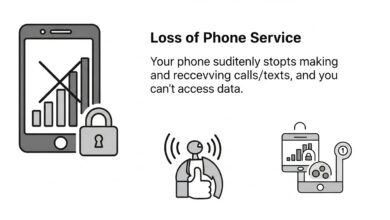
Step 5: Your SIM Suddenly Stops Working
This is the moment when the scam is successful.
You lose:
- Signals
- SMS
- Incoming calls
The scammer now receives your OTPs instead.
This is the biggest red flag.
Step 6: Scammer Logs Into Your Bank & Accounts
The scammer now uses your phone number to:
- Reset Gmail password
- Reset Facebook/Instagram login
- Reset banking credentials
- Approve transaction OTPs
This is how victims lose money within minutes.
Step 7: Final Step – Money Transfers and Account Takeovers
Once everything is under the scammer’s control, they:
- Empty bank accounts
- Lock you out of email or WhatsApp
- Demand ransom to return your accounts
This is the complete cycle of how SIM swapping happens.
Real Stories (Short, True Examples)
1. The Pakistani Freelancer Who Lost $2,800
A Karachi-based freelancer shared his story online.
One evening, his phone suddenly lost signal. Within 14 minutes, scammers:
- reset his Gmail
- hacked his Payoneer
- transferred $2,800 to another account
He discovered it only after regaining control 2 hours later.
2. California Teen Who Stole $5 Million in Crypto
In the US, an 18-year-old used SIM swapping to steal cryptocurrency.
He targeted investors using leaked data, performed SIM swaps, then drained wallets containing millions of dollars.
He was later arrested — but victims never recovered their funds.
3. Indian Banker Victim
A banker in Delhi received a fake KYC (verification) call.
The scammer gathered enough information to SIM swap her number.
They drained her savings the same night.
These stories show how quickly scammers act once they succeed.
Warning Signs You Are Being Targeted
- Sudden loss of mobile signal
- Email password reset notifications
- Unknown login alerts from apps
- Bank OTPs you did not request
- Customer care messages you didn’t initiate
If even one of these happens, act immediately.

How to Protect Yourself (Simple Tips)
1. Never share personal details publicly
Even birthdays and photos can be used in verification questions.
2. Use app-based authentication (NOT SMS OTP)
Use Google Authenticator, Microsoft Authenticator, or Authy.
3. Set a “SIM Lock PIN” with your mobile company
Some carriers offer a “Port Freeze” or “SIM Change Lock.”
Enable it immediately.
4. Use strong email passwords
Your email is the gate to all your accounts.
5. Don’t click unknown links
Phishing is the most common starting point for SIM swap attacks.

Conclusion
Understanding how SIM swapping happens is your first and strongest protection. Most victims never imagine they can be targeted — until they lose access to everything. Stay alert, protect your personal information, and use strong authentication methods so your phone number can never be used against you.