
Forever IKS Server Explained: How It Works, What It Promises, and the Reality
A deep look inside Forever IKS servers, their technology, marketing claims, risks, and why “forever” rarely means permanent
🌍 Introduction: The Rise of the “Forever” Promise
In satellite TV communities, few names generate as much curiosity—and confusion—as Forever IKS Server. Marketed as a near-permanent solution to unlock premium satellite channels, Forever IKS has become a popular feature in low-cost satellite receivers across Asia, Africa, the Middle East, and parts of Europe.
The appeal is obvious: a one-time setup or low yearly fee, hundreds of encrypted channels unlocked, and no direct subscription with official broadcasters. But behind the branding lies a fragile, controversial system built on Internet Key Sharing (IKS)—a technology that walks a fine line between technical ingenuity and outright piracy.
This article explains what Forever IKS really is, how it works, what it promises users, and what the reality looks like in practice.

📡 What Is Forever IKS Server?
Forever IKS Server is a proprietary Internet Key Sharing service embedded into or supported by specific satellite TV receivers. It allows these receivers to decrypt encrypted satellite channels by receiving shared decryption keys over the internet.
It is most commonly found in receivers from brands such as:
The term “Forever” is primarily a marketing label, suggesting long-term or lifetime access. In reality, access is server-dependent, often time-limited, and tied closely to specific hardware models and firmware versions.
Variants and Sub-Servers
Forever IKS is often divided into internal tiers or versions, such as:
- Forever / Forever Pro
- Fshare
- IM Server
These are not fundamentally different technologies but variations of the same IKS infrastructure, often adjusted for region, load, or receiver compatibility.
🌐 How Forever IKS Works (Conceptual Explanation)
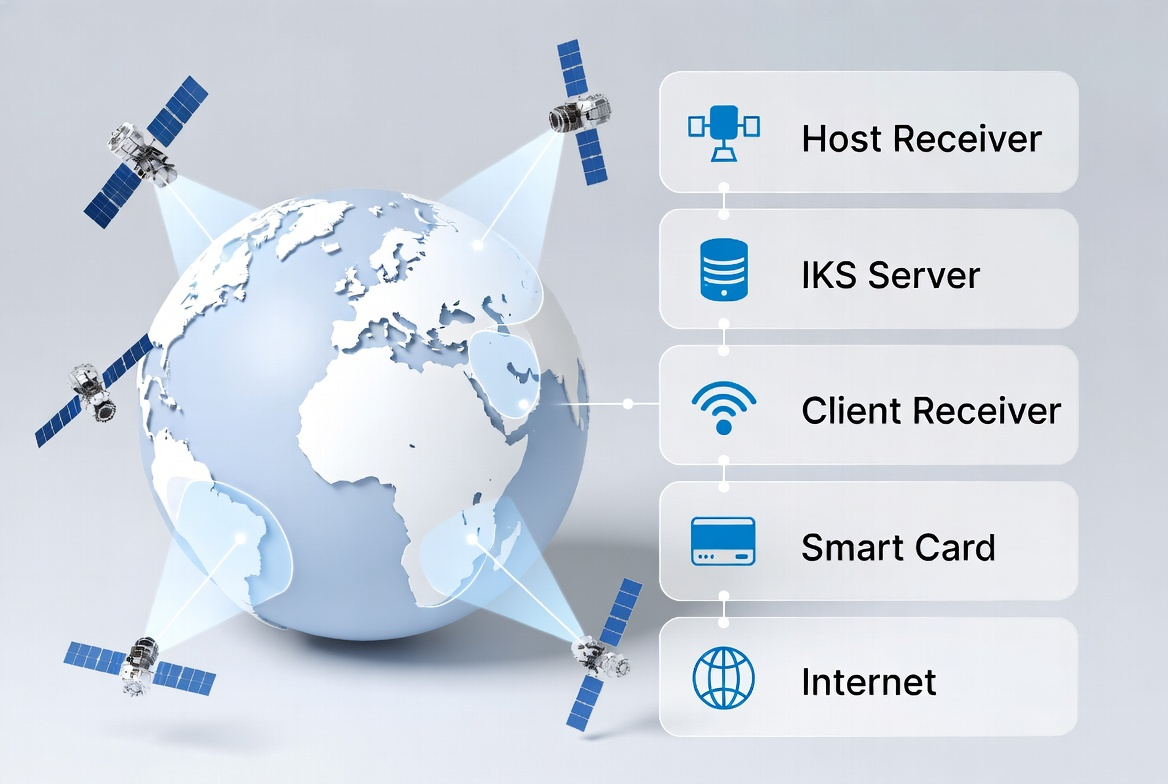
Forever IKS is built on the same principle as all IKS systems: card-sharing over the internet.
At a high level:
- Satellite providers encrypt channels using smart cards
- Control words (temporary decryption keys) change every few seconds
- Forever servers redistribute these keys to many users simultaneously
Simplified Workflow:
- A Forever-compatible receiver tunes into an encrypted channel
- The receiver sends a request over the internet
- The Forever server supplies the required control word
- The receiver uses the key to decrypt the satellite signal
The video itself still comes directly from the satellite dish. Only the keys travel via the internet, making the system bandwidth-efficient but highly sensitive to delays.

🔧 Hardware and Firmware Dependency
Forever IKS does not work universally across all satellite receivers. It relies on:
- Specific chipsets (commonly low-cost DVB-S2 processors)
- Custom firmware maintained by manufacturers or partners
- Internet connectivity via Ethernet or Wi-Fi
Firmware updates play a crucial role. When encryption systems change or servers are restructured, outdated firmware may cause:
- Channels not opening
- Constant freezing
- Complete service loss
This tight hardware lock-in is one reason Forever IKS survives despite enforcement—it is fragmented and decentralized.
📢 What Forever IKS Promises Users
Forever IKS is aggressively marketed with attractive claims, especially in regions where official pay-TV is expensive or unavailable.
Common Promises:
- “Lifetime” or long-term access
- Hundreds of premium channels
- Major sports and movie packages
- Low cost compared to official subscriptions
- Better stability than CCCAM
- Easy setup for beginners
In online forums and reseller ads, Forever IKS is often described as a “set it and forget it” solution for satellite TV.
⚠️ The Reality Behind the Forever Name
Despite its marketing, Forever IKS has significant limitations.
❌ Not Truly Forever
Access depends entirely on:
- Server availability
- Active maintenance
- Continued firmware support
If servers go offline or manufacturers stop updates, access ends—sometimes permanently.
⏱️ Downtime and Instability
Users frequently report:
- Channels opening one day and failing the next
- Regional blackouts
- Long outages during encryption updates
Unlike legal services, there is no guaranteed uptime or support.

⚖️ Legal and Security Risks
From a legal standpoint, Forever IKS is considered unauthorized decryption in most countries.
Key Risks:
- Copyright infringement
- Device confiscation
- Fines or criminal charges (region-dependent)
- Liability for commercial use (cafés, bars, shops)
Security Concerns:
- Unverified firmware updates
- Malware-infected plugins
- Data leakage via unknown servers
- Sudden service termination with no refund
Users often underestimate these risks due to the casual way Forever IKS is marketed.
📉 Forever IKS vs IPTV: A Changing Landscape
While Forever IKS once dominated satellite piracy, IPTV piracy has rapidly overtaken it.
Why users shift away:
- IPTV requires no dish
- Easier setup
- Works on phones and smart TVs
- Lower dependency on encryption timing
Forever IKS still appeals to:
- Areas with poor broadband
- Satellite hobbyists
- Users invested in existing dish setups
But overall, the trend favors internet-only piracy models, leaving IKS increasingly niche.
🔮 The Future of Forever IKS
Forever IKS is unlikely to disappear immediately, but its future is limited.
Expected trends:
- Fewer supported receivers
- Shorter activation periods
- More frequent outages
- Increased enforcement pressure
Rather than a permanent solution, Forever IKS represents the final stage of traditional satellite card-sharing before full migration to streaming ecosystems.

🧠 Final Verdict
Forever IKS Server is not magic, not hacking brilliance, and certainly not permanent. It is a server-based redistribution system that relies on shared subscriptions, constant maintenance, and legal blind spots.
While it may offer short-term savings, users face:
- Unreliable service
- Legal exposure
- Security risks
- Eventual obsolescence
For long-term, stable viewing, legal streaming platforms remain the only sustainable option.
Forever IKS may still exist—but the era it represents is clearly fading.