
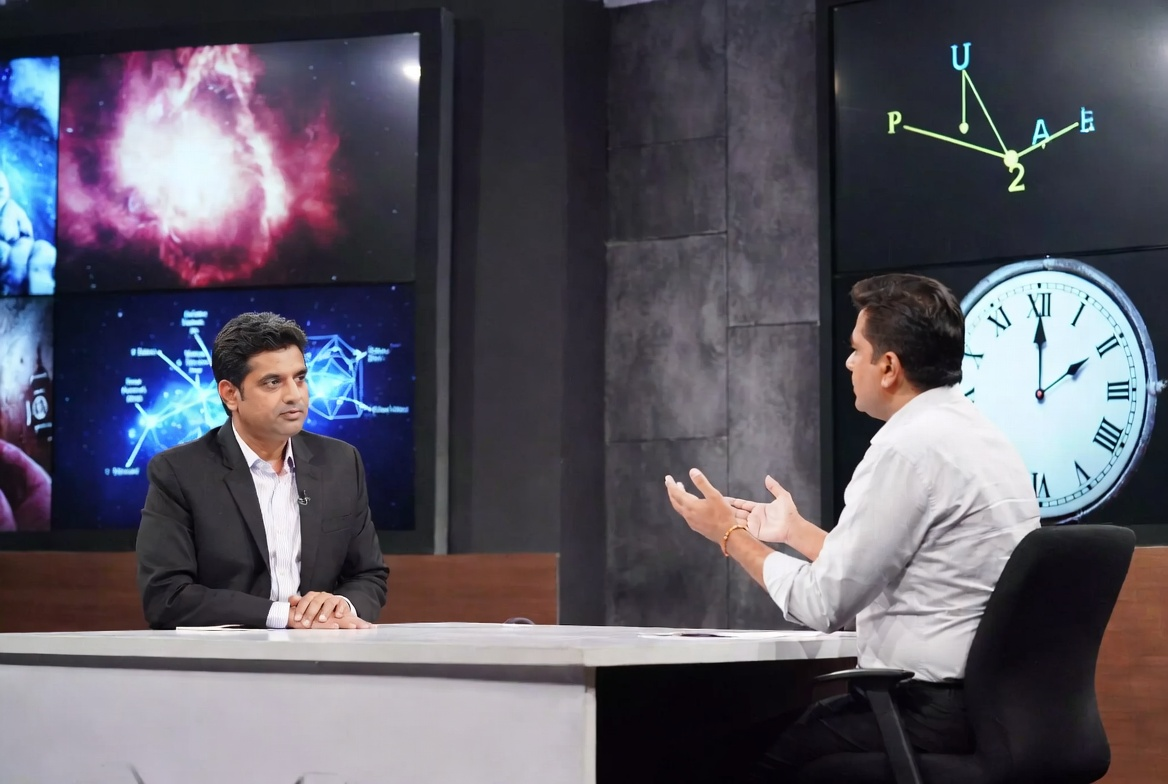
The question “did Awais Iqbal accept Islam?” has become one of the most discussed and controversial topics on Pakistani social media in recent weeks. The speculation began after a long scientific and philosophical debate aired on Bab-e-Imam TV, featuring Dr. Syed Faiz Abbas Shah and Awais Iqbal, a well-known former journalist and outspoken atheist.
Clips, promos, and commentary from the discussion quickly spread online, leading many viewers to believe that Awais Iqbal had either lost the debate or announced his acceptance of Islam. But what actually happened—and what is fact versus interpretation?
This article presents a clear, evidence-based breakdown.
Background of the Debate on Bab-e-Imam TV
The discussion took place on Bab-e-Imam TV and was framed as a scientific and intellectual dialogue, not a religious sermon.
Participants:
- Dr. Syed Faiz Abbas Shah
Formerly affiliated with Ohio University, USA, known for discussing science, philosophy, and theology. - Awais Iqbal
Former Pakistani journalist, media personality, and publicly declared atheist, known for criticizing religion—especially Islam—on intellectual grounds.
The debate attracted attention because it directly challenged atheism using modern scientific theories, rather than traditional religious arguments.
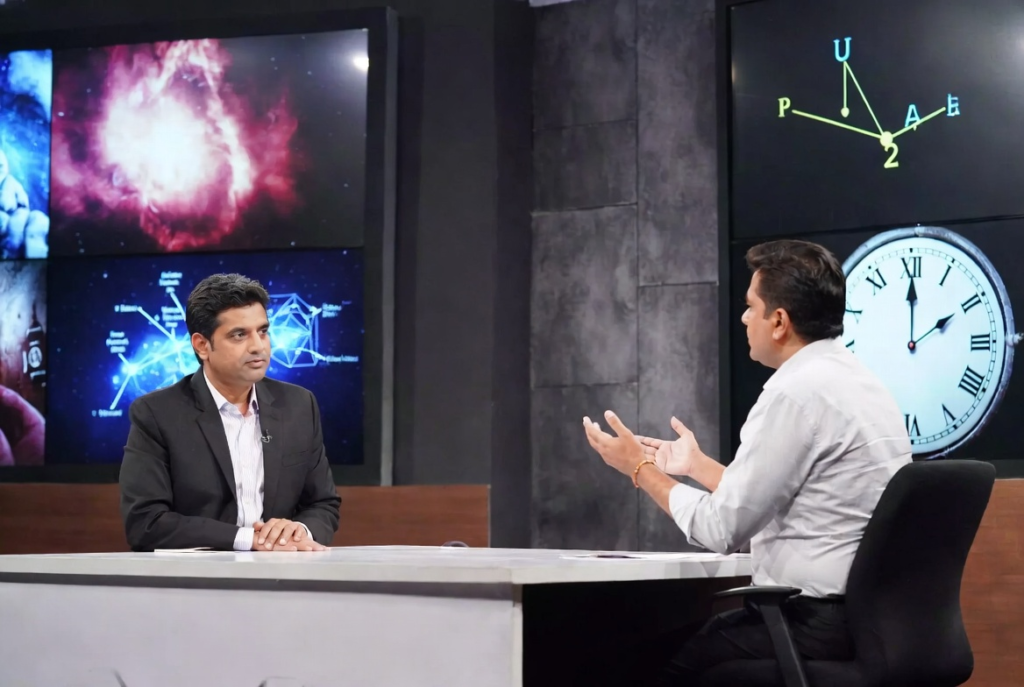
Core Question of the Debate: Time Before the Big Bang
The central issue was highly specific and scientific:
Did time exist before the Big Bang?
Awais Iqbal’s Position
Awais Iqbal argued that:
- According to mainstream cosmology, the universe began with the Big Bang
- Time itself started at “Time Zero”
- Therefore, nothing existed before the Big Bang
He publicly stated that if science could prove the existence of time or a phase before the Big Bang, he would reconsider his position—and even accept Islam.
This conditional statement later became the basis of the viral conversion claim.
Dr. Faiz Abbas Shah’s Scientific Arguments
Dr. Faiz Abbas did not argue from scripture. Instead, he referenced modern theoretical physics and research literature.
1. Pre-Big Bang Theories
He cited scientific frameworks such as:
- String Theory
- Loop Quantum Gravity
These models propose that:
- The Big Bang may not be the absolute beginning
- It could be a transition phase from an earlier state of the universe
2. Informational Energy Concept
Dr. Faiz Abbas referenced a 2025 research paper discussed as “The Pre-Big Bang Universe”, which suggests:
- The existence of informational energy before the Big Bang
- A structured order guiding cosmic formation
3. Continuity of Time
His argument concluded that:
- If time or order existed before the Big Bang
- Then the universe did not emerge from absolute nothingness
- This implies intentional design rather than randomness
He linked this reasoning to the Islamic concept of a Creator, while maintaining a scientific framing.
Did Awais Iqbal Admit Defeat?
After the debate aired, multiple interpretations emerged.
Claims Circulating Online
Some videos and social media posts claimed that:
- Awais Iqbal acknowledged weaknesses in his arguments
- He accepted that science does not definitively deny pre-Big Bang existence
- He appeared intellectually challenged by the research references
However, admitting a weak argument is not the same as accepting Islam.
The “Acceptance of Islam” Promo Explained
A major source of confusion was a promotional clip circulated after the debate.
What the Promo Suggested
- It implied an “announcement of Islam”
- It used emotionally charged language and visuals
- It framed the debate as a decisive turning point
What Is Missing
- No full, verified video of a clear shahada
- No personal statement from Awais Iqbal confirming conversion
- No follow-up clarification directly from him in this context
As a result, the claim remains unconfirmed.
Awais Iqbal’s Professional and Ideological Background
Understanding why the claim gained traction requires context.
- Nearly 20 years in Pakistani media
- Worked with Geo News, Samaa, and Neo News
- Hosted programs associated with Javed Ahmad Ghamidi
- Later became a public atheist, known for religious critique on YouTube
Because of his reputation as a “hardline atheist”, even a theoretical concession sparked intense reactions.
Public Reaction and Scholarly Debate
Supporters’ View
- Claimed the debate showed harmony between science and Islam
- Viewed the discussion as proof that atheism collapses under modern physics
Skeptics’ View
- Argued that theoretical physics ≠ empirical proof
- Pointed out that scientific theories remain hypothetical
- Emphasized that intellectual debate does not equal faith acceptance
So, Did Awais Iqbal Accept Islam?
Based on Available Evidence:
- ❌ No verified public declaration of Islam
- ❌ No confirmed shahada
- ❌ No direct statement confirming conversion
What Did Happen:
- ✔ A conditional challenge was discussed
- ✔ Scientific theories were debated
- ✔ Arguments were critically examined
- ✔ Social media amplified selective interpretations
Conclusion:
As of now, there is no confirmed evidence that Awais Iqbal accepted Islam. The claim remains a matter of interpretation, not established fact.
Why This Debate Still Matters
Beyond the viral controversy, the discussion highlighted an important point:
The relationship between science and religion is not necessarily one of conflict—but dialogue.
The debate attempted to show that:
- Science explores how the universe works
- Religion explores why it exists
- The two are not automatically contradictory
Final Verdict
The question “did awais iqbal accept islam” cannot be answered with a simple yes or no based on current, verifiable information. What can be said with certainty is that the debate sparked one of the most intellectually charged discussions between atheism and Islamic theology in recent Pakistani media.
Until Awais Iqbal himself issues a clear, personal confirmation, the claim should be treated as unverified speculation, not fact.