
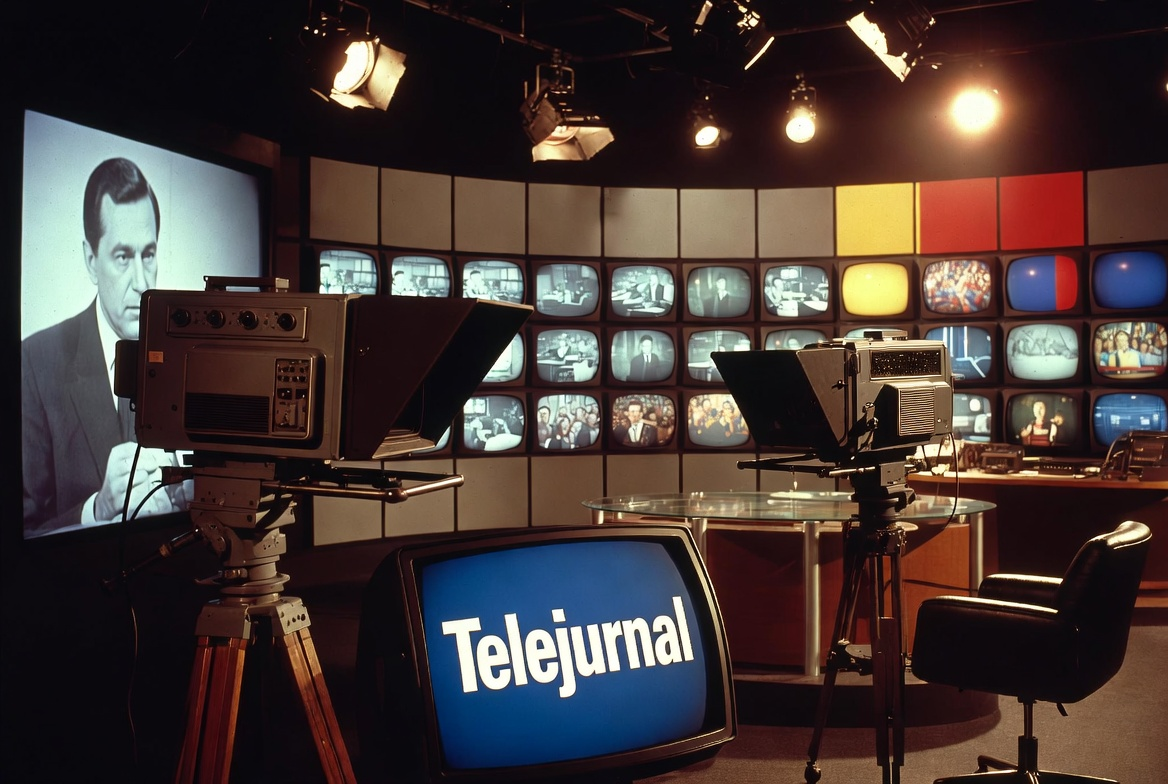
For decades, Telejurnal has been more than just a news bulletin. In Romania, it has acted as a mirror of political power, public resistance, and national transformation. From its role as a tightly controlled propaganda tool during communism to its dramatic live broadcasts during the 1989 Revolution, Telejurnal TVR remains one of the most historically significant news programs in Eastern Europe.
This article explains—clearly and simply—the history of Telejurnal, its channel changes between TVR1 and TVR2, and the truth behind claims of 停播复播 (suspension and resumption).
Origins of Telejurnal: Romania’s First Television News Voice (1956–1989)
Television broadcasting in Romania officially began on December 31, 1956, under Televiziunea Română (TVR). Very quickly, Telejurnal emerged as the main national news program.
During the communist era, especially under Nicolae Ceaușescu, Telejurnal was not independent journalism. Instead, it served as:
- A state-controlled news outlet
- A platform for ideological messaging
- A daily reinforcement of the leader’s cult of personality
Most broadcasts focused on factory visits, political speeches, and “achievements” of the socialist system. Alternative viewpoints were entirely absent.
Color Broadcasting and Technical Limits
In 1983, Telejurnal switched to color broadcasting (PAL system). However, due to economic hardship, very few Romanian households could benefit from this upgrade until after 1990.
The 1985 TVR2 Suspension: Why Telejurnal Was Affected
One of the most misunderstood moments in Telejurnal history is the 1985 broadcasting restriction, often searched today as Telejurnal 停播复播.
What Actually Happened?
- TVR2 was completely shut down as part of Ceaușescu’s so-called “energy saving program”
- TVR1 became the only active channel
- Total daily broadcasting was reduced to just 2 hours
Telejurnal’s Reduced Schedule
Telejurnal itself was not canceled, but its presence was heavily restricted:
- 20:00 – Main Telejurnal edition
- 21:50 – Short closing summary
Programming became almost entirely political propaganda. Even when weekday broadcasts expanded slightly in 1988, real journalism remained impossible.
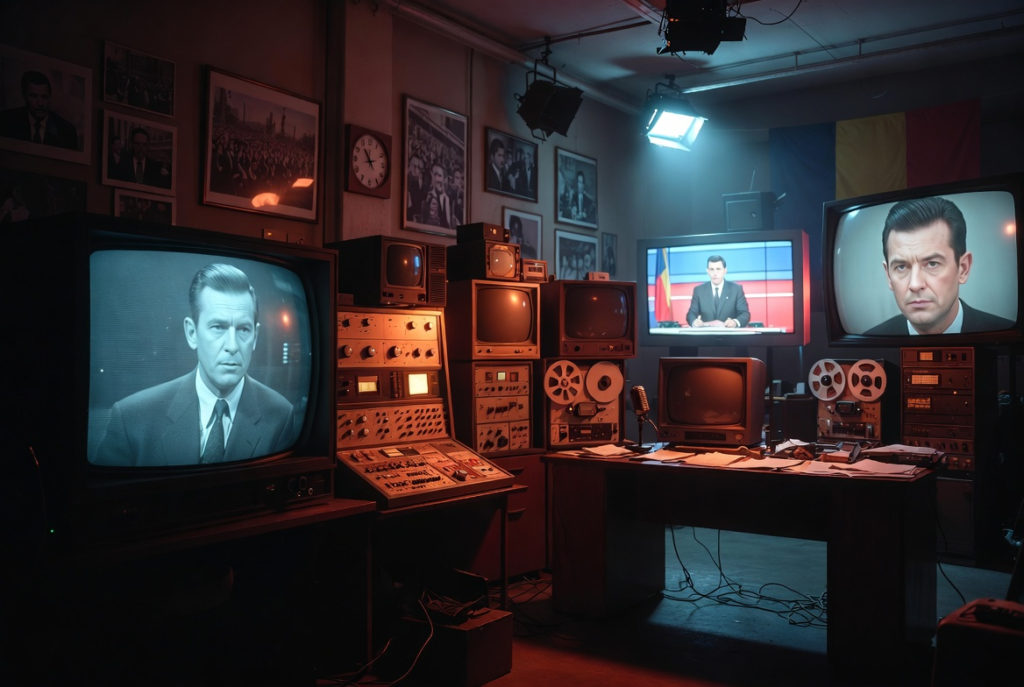
December 1989: Telejurnal and the Romanian Revolution
The Romanian Revolution changed everything—overnight.
Storming of TVR
On December 22, 1989, revolutionaries seized the TVR headquarters in Bucharest. Regular broadcasts were briefly interrupted, and the channel was renamed:
Televiziunea Română Liberă (TVRL)
(Free Romanian Television)
The First Live Revolution on TV
Romania became the first country to broadcast its revolution live.
At 12:51 PM, Studio 4 went on air. Public figures addressed the nation, and revolutionary announcements replaced regime propaganda. Telejurnal-style updates continued—but now they served the people, not the state.
Despite active fighting around the TV tower, broadcasts never stopped. TVR became a command center, information hub, and symbol of freedom.
On December 25, the trial and execution of Nicolae and Elena Ceaușescu were aired—marking a historic turning point for Romanian media.
Post-Revolution Channel Changes: TVR1 and TVR2 Return (1990)
Official Resumption of TVR2
On February 17, 1990:
- TVR2 officially resumed broadcasting
- TVRL was renamed TVR1
- The modern TVR channel structure was established
This is the key 复播 (resumption) moment often referenced in searches.
Where Did Telejurnal Go?
- Telejurnal became firmly anchored on TVR1
- The “Liberă” branding was dropped after public pressure
- Editorial independence slowly improved over time
Since 1990, Telejurnal has never been formally suspended again.
Modern Era: Telejurnal on TVR1, TVR2, and Beyond
Technical Upgrades
- Full color broadcasting standardized after 1990
- HD broadcasting introduced in November 2019
Financial Crises—But Not Telejurnal
While TVR faced serious financial challenges (including the closure of TVR Cultural in 2012, later relaunched in 2022), Telejurnal remained uninterrupted.
2023 Signal Hijack Incident
In February 2023, hackers briefly interrupted TVR transmissions with a test card and cryptic messages. Despite online rumors, Telejurnal was not suspended, and normal broadcasts resumed quickly.
Why Telejurnal Still Matters Today
Telejurnal’s journey reflects Romania’s own path:
- From dictatorship to democracy
- From propaganda to public service
- From silence to live revolution
Unlike many news programs, Telejurnal did not simply survive history—it helped shape it.
For viewers searching today for Telejurnal TVR, Telejurnal TVR2, or TVR2 Romania, the truth is clear:
Telejurnal’s suspensions were never editorial decisions—only political and systemic ones. Its survival is proof of Romania’s media resilience.