
Introduction: A Wake-Up Call for YouTube Creators
The recent reports surrounding Awais Iqbal’s YouTube channel being hijacked and deleted have sent shockwaves through the creator community. According to Awais Iqbal’s own social media posts, his channel was compromised, after which he began coordinating directly with YouTube and Google support in an effort to recover it.
This incident is not just about one creator. It highlights a growing and alarming trend where even experienced users with two-factor authentication (2FA) enabled are falling victim to sophisticated account takeovers. For YouTubers, whose channels represent years of effort, income, and audience trust, such an attack can be devastating.
What Happened to Awais Iqbal’s YouTube Channel?
Based on publicly shared information, Awais Iqbal indicated that:
- His YouTube channel was hijacked
- The channel was deleted or rendered inaccessible
- He was actively working with YouTube support for recovery
While exact technical details have not been officially disclosed, the situation closely mirrors other high-profile YouTube hacking cases seen globally in recent years.
Why YouTube Channels Are So Vulnerable
A YouTube channel is directly linked to a Google account, usually a Gmail address. Once an attacker gains access to that Google account, they effectively gain control over:
- YouTube channels
- AdSense earnings
- Emails and recovery options
- Google Drive and backups
- Brand accounts and permissions
This makes Google accounts a high-value target, especially for creators with large audiences or monetized channels.
How Can a YouTube Channel Be Hijacked Even With 2FA Enabled?
Many people assume that enabling 2FA makes their account “unhackable.” Unfortunately, that is not true. While 2FA significantly improves security, it is not foolproof. Below are the most common real-world attack vectors used in cases like this.
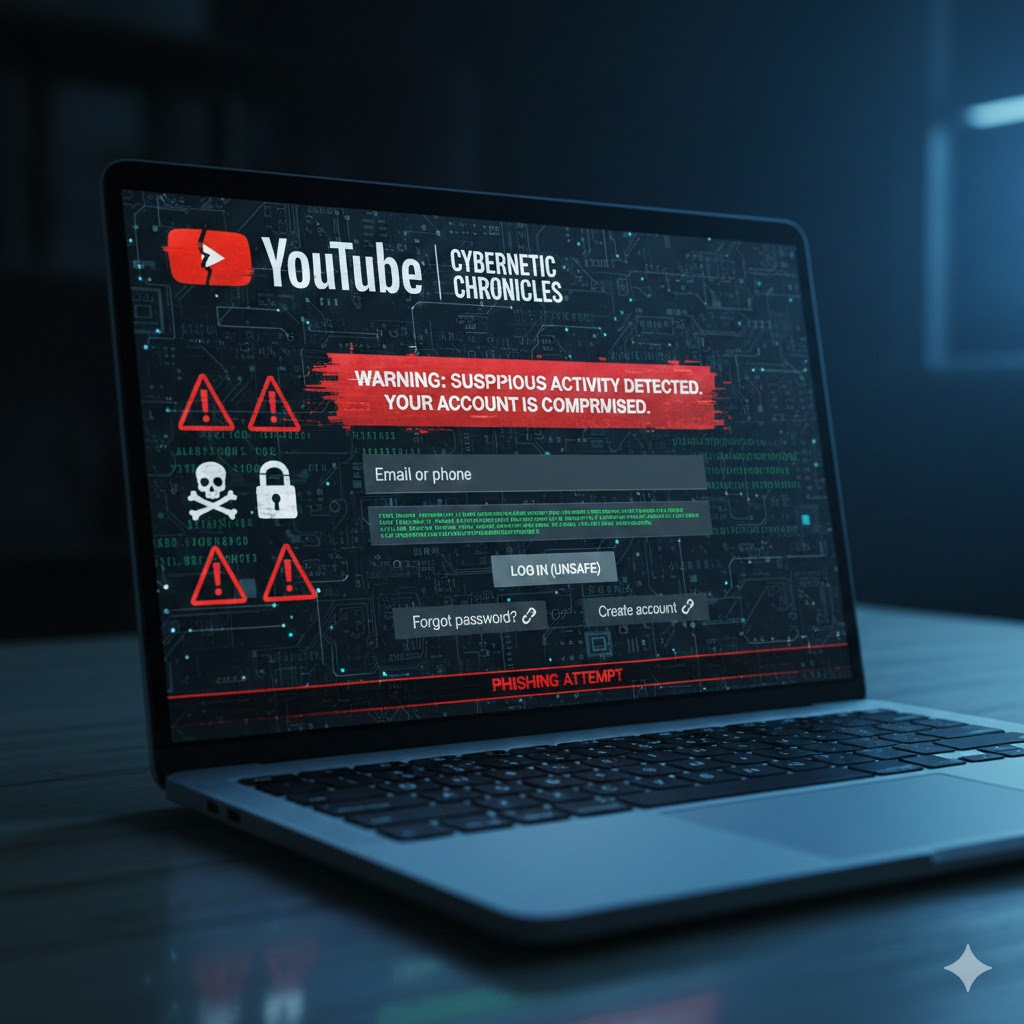
1. Phishing and Social Engineering Attacks
Phishing remains the number one cause of account takeovers.
Attackers often:
- Create fake Google or YouTube login pages
- Send emails or messages that appear legitimate
- Claim issues like “copyright strikes,” “monetization review,” or “policy violations”
If a user enters:
- Their email and password
- A temporary 2FA code
…the attacker gains instant access without technically “breaking” 2FA.
2. SIM Swapping and Phone Number Takeover
If 2FA is linked to SMS verification, attackers may target the phone number instead of the account.
This involves:
- Convincing a mobile carrier to transfer the number
- Intercepting SMS-based verification codes
- Resetting account access
Once the number is compromised, 2FA becomes useless.
3. Malware and Device Compromise
Malicious software can silently operate in the background and:
- Capture keystrokes
- Monitor browser sessions
- Record login tokens and cookies
- Observe real-time 2FA approvals
Malware often spreads through:
- Cracked software
- Fake browser extensions
- Email attachments
- Compromised Wi-Fi networks

4. Session Hijacking and Cookie Theft
Instead of logging in, attackers sometimes steal an active session.
This allows them to:
- Access accounts without passwords
- Bypass login screens entirely
- Make changes instantly
Session hijacking often happens through:
- Infected browsers
- Unsafe extensions
- Public or compromised networks
5. Weak Account Recovery Options
Even strong passwords and 2FA can be defeated if:
- Recovery email is insecure
- Phone number is outdated
- Backup codes are leaked or stored poorly
Attackers exploit these secondary entry points to reset access.
6. Data Breaches and Password Reuse
If a creator reused passwords across multiple platforms, attackers may use:
- Old leaked passwords
- Credential stuffing techniques
- Targeted brute-force attempts
This is especially dangerous for high-profile creators who are frequently targeted.
Why High-Profile Creators Are Targeted
Creators like Awais Iqbal are targeted because hacked channels can be used for:
- Cryptocurrency scams
- Fake livestreams
- Ransom demands
- Channel resale
- Reputation damage
- Audience exploitation
In many cases, attackers delete or rebrand channels within minutes.

How YouTube Channel Recovery Usually Works
If a channel is hijacked:
- Creator contacts Google / YouTube support
- Identity and ownership are verified
- Activity logs are reviewed
- Channel may be restored from backups
Recovery can take days or weeks, depending on complexity.
How Creators Can Better Protect Their Accounts
While no system is perfect, creators can dramatically reduce risk by:
- Using app-based 2FA (Google Authenticator, Authy)
- Avoiding SMS-based verification
- Enabling Google Advanced Protection Program
- Regularly reviewing account activity
- Removing unused devices and sessions
- Never clicking login links from emails
- Using unique passwords everywhere
- Keeping systems and browsers updated
Final Thoughts
The reported hijacking of Awais Iqbal’s YouTube channel serves as a powerful reminder that digital fame comes with digital risk. Even with modern security tools like 2FA, attackers continue to evolve their methods.
For creators, security is no longer optional—it is a continuous process that requires awareness, discipline, and vigilance. As YouTube remains one of the world’s most influential platforms, incidents like this underline the urgent need for better education and stronger account protection.