
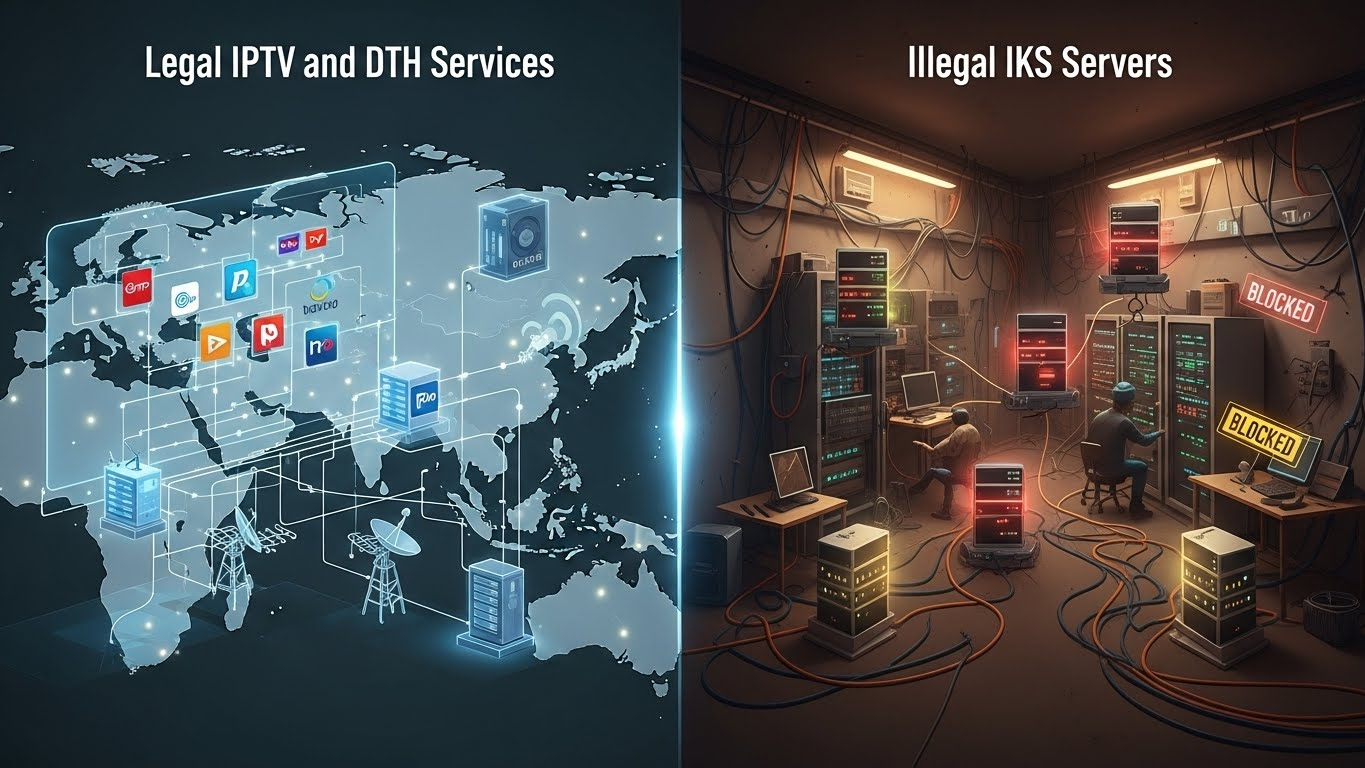
When Popularity Becomes a Weakness
Airtel DTH was launched in 2008 with a clear ambition: to bring high-quality digital television to millions of Indian households using modern MPEG-4 compression and advanced conditional access systems (CAS). Within a decade, it became India’s second-largest DTH platform, serving around 18 million active subscribers at its peak and offering 500+ channels, including premium sports, movies, and regional content.
But in the world of satellite TV, popularity often attracts piracy.
Over the years, Airtel DTH quietly became one of the most targeted platforms by Internet Key Sharing (IKS) servers across Asia. From rural South Asia to cross-border networks operating out of China, Russia, and Southeast Asia, Airtel’s encrypted signals turned into a high-value digital commodity for pirates.
So why Airtel DTH specifically?
The answer lies in a powerful mix of market dominance, content demand, economic realities, and evolving piracy technology.

1. Massive Subscriber Base: A Goldmine for IKS Operators
IKS servers thrive on scale. The more users a platform has, the more profitable piracy becomes.
Airtel DTH’s ~25% market share made it a natural target. India already hosts one of the largest DTH markets in Asia, and by the mid-2010s, it surpassed many developed markets in subscriber volume. For IKS operators, this meant:
- A huge pool of potential illegal users
- Familiar channel lineups across regions
- Easy resale of “cheap access” subscriptions
IKS resellers often advertise Airtel access for as low as $8–16 per year, targeting price-sensitive users in rural India, Pakistan, Bangladesh, Nepal, and Sri Lanka. Once one valid subscription key is extracted, it can be shared with thousands of receivers simultaneously.
In simple terms:
👉 More Airtel users = more piracy profit
2. Premium Content That Asia Craves
Not all TV platforms are equally attractive to pirates. Airtel DTH carries exactly the kind of content that drives illegal viewing.
High-Value Content Includes:
- Cricket (IPL, ICC events) via Star Sports
- Bollywood movie channels
- Popular Hindi, Tamil, Telugu, Bengali, and regional entertainment
- HD and premium movie packs
In Asia, sports piracy alone costs broadcasters hundreds of millions of dollars annually. Cricket, in particular, has unmatched demand. When official subscriptions rise in price, piracy fills the gap almost instantly.
Many users openly admit online that they turn to IKS when:
- Sports channels are bundled expensively
- HD packs cost ₹350–₹550 per month
- Channels are removed due to broadcaster disputes
For IKS sellers, Airtel’s premium lineup is easy to market:
“Why pay monthly when you can unlock everything forever?”

3. Pricing Pressure and the Rise of Piracy
The introduction of TRAI’s 2019 tariff regulations changed the economics of DTH in India. While the goal was transparency, it also:
- Increased perceived costs for end users
- Removed cheap bundled channel packs
- Forced users into à-la-carte pricing
For middle- and low-income households, especially outside metro cities, this was a breaking point. Studies and industry reports estimate 20–30% piracy penetration in parts of the Indian TV market.
IKS servers stepped in as a “budget alternative.”
Airtel, being a premium brand, was hit harder than smaller operators. When official pricing rises, piracy demand rises faster — especially in regions where enforcement is weak.
4. Conditional Access Systems: Strong, But Not Untouchable
Airtel DTH uses industry-standard Conditional Access Systems (CAS) such as Nagra-based encryption to protect its broadcasts. These systems are secure on paper — but IKS doesn’t break encryption directly.
Instead, it exploits:
- Legitimate subscriptions
- Extracted control words (keys)
- Internet distribution to thousands of receivers
In the early 2000s, piracy relied on smart card cloning. By the 2010s, Asia shifted heavily toward IKS, powered by faster internet and cheap servers.
Occasional reports of:
- Open ports
- Malware infections
- Alleged data breach rumors (even if denied)
…create an ecosystem where piracy groups constantly probe for weaknesses. Even unrelated cyber incidents raise confidence among pirates that systems can be exploited indirectly.

5. Cross-Border Piracy Networks in Asia
Airtel DTH’s popularity extends beyond India. Indian channels are deeply popular across Asia and MENA regions, especially among expatriate communities.
IKS servers often operate:
- From China, Eastern Europe, or Russia
- Using resellers in South Asia
- Hosting servers beyond local legal reach
This mirrors past large-scale piracy cases like BeoutQ, which illegally redistributed premium sports across regions.
Enforcement remains challenging:
- VPNs bypass site blocks
- Servers relocate quickly
- End users face minimal risk perception
As a result, no major Airtel-specific IKS busts have made headlines — even though piracy remains widespread.
6. OTT, IPTV, and a Larger Attack Surface
Ironically, Airtel’s move toward IPTV, broadband bundling, and Airtel Black has improved user experience — but also expanded its digital footprint.
By 2025:
- Airtel IPTV reached 2,000+ cities
- DTH and broadband ecosystems merged
- Users gained app-based TV access
This convergence increases:
- Cyber exposure
- App-based piracy
- Credential abuse
Some users even shift to IKS because DTH signals are affected by weather disruptions, while shared keys promise “always-on” access.
Conclusion: Popular, Premium, and Price-Sensitive — A Perfect Target
Airtel DTH did not become an IKS target because it was weak — it became a target because it was valuable.
Its:
- Massive subscriber base
- Premium cricket and movie content
- Rising subscription costs
- Regional demand across Asia
…made it irresistible to IKS operators chasing easy profits.
As of 2025, Airtel is responding with IPTV expansion, partnerships, and tighter controls, but piracy remains a moving target. For users, the choice is clear: while IKS may seem cheap, it carries risks ranging from malware and service shutdowns to legal consequences.
In the long run, supporting legal platforms is the only sustainable way to ensure quality content, stable service, and a piracy-free future.