
Introduction: When a Good Idea Meets the Wrong Infrastructure
ZONG’s TimePey and later PayMax were introduced as USSD-based payment and wallet solutions aimed at increasing financial inclusion in Pakistan. The idea was simple and powerful:
- No smartphone required
- No internet needed
- Works on any mobile phone
On paper, this made TimePey & PayMax ideal for the Pakistani market. However, despite the promise, both services eventually failed to gain sustainable adoption and were discontinued.
This case study does not ask why the product failed. Instead, it asks a more important question:
Why did the infrastructure fail the product?
The Role of USSD in TimePey & PayMax
Both TimePey & PayMax depended heavily on USSD for:
- User registration
- Balance inquiries
- Payments and transfers
- Confirmations and security steps
This meant the success of the entire service relied on stable, long-lived, and predictable USSD sessions.
Infrastructure Expectation vs Reality
What the Product Required
TimePey & PayMax required USSD to support:
- Multi-step flows
- Secure confirmations
- OTP-like verification
- Long user input
- Thinking time for financial decisions
What the Infrastructure Delivered
The actual USSD behavior showed:
- Aggressive session expiry
- Weak timer refresh logic
- Poor handling of long inputs
- Inconsistent session stability
This mismatch created constant friction for users.
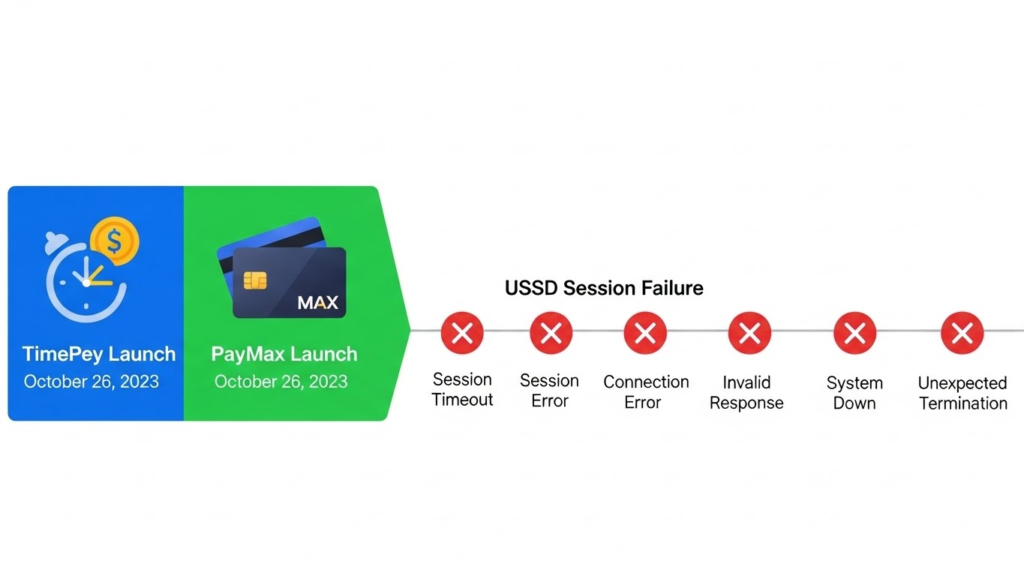
Failure Point 1: Session Expiry During Critical Steps
One of the most damaging issues was session expiry at critical moments, such as:
- While entering account numbers
- Before payment confirmation
- During identity verification
From a user’s perspective:
- The transaction felt unsafe
- The system felt unreliable
From a system perspective:
- The USSD session simply expired
This is unacceptable for financial services.
Failure Point 2: Timer Reset Failure Between Steps
In well-designed USSD systems, every valid user input refreshes the session timer.
In the case of TimePey & PayMax:
- User input was often accepted
- Backend processing started
- The session timer was not consistently refreshed
As a result, sessions expired even when users followed instructions exactly.
Failure Point 3: Long Input Rejection in Financial Flows
Financial services require users to enter:
- CNIC numbers
- Account numbers
- Reference IDs
ZONG’s USSD platform showed clear limitations in handling such inputs reliably.
This made:
- Registration difficult
- Payments stressful
- Error recovery almost impossible
Why This Was an Infrastructure Problem, Not a Product Problem
It is important to separate product design from platform capability.
TimePey & PayMax had:
- A clear value proposition
- A relevant market
- Strong distribution through a mobile operator
What they lacked was:
- A USSD platform configured for financial-grade reliability
No amount of menu redesign can fix a session that expires unpredictably.
The Trust Breakdown
In financial services, trust is everything.
Repeated USSD failures led to:
- Incomplete transactions
- Fear of lost money
- User hesitation
- Reduced repeat usage
Once trust is lost, even a well-designed product struggles to survive.
Why Other Simple USSD Services Survived
Interestingly, ZONG’s basic USSD services continued to work well.
This created a misleading internal signal:
- “USSD is working fine”
In reality:
- USSD was only working for simple, fast tasks
- It was failing for complex, high-risk financial workflows
The Silent Cost of Legacy Systems
Legacy USSD systems:
- Are optimized for speed, not depth
- Favor short interactions
- Penalize careful users
Using such systems for financial services introduces risk by design.
Lessons for Future USSD-Based Products
This case study offers important lessons:
- USSD must be treated as a platform, not a feature
- Financial services require extended session profiles
- Long input and thinking time must be supported
- Infrastructure limits define product success
Ignoring these realities leads to predictable failure.
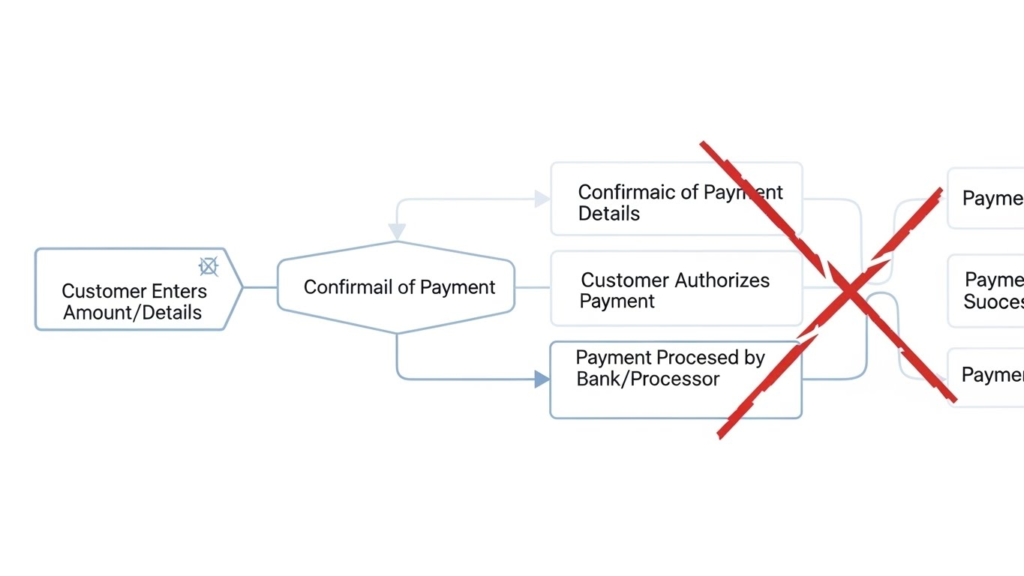
Conclusion: When Infrastructure Decides the Outcome
The collapse of ZONG TimePey & PayMax was not caused by a lack of demand or poor product ideas.
It was caused by an infrastructure that was never designed or upgraded to support what the product required.
This case shows that in digital financial services, infrastructure is not a background detail — it is the foundation.
Without modern, reliable USSD session management, even the best ideas cannot survive.