
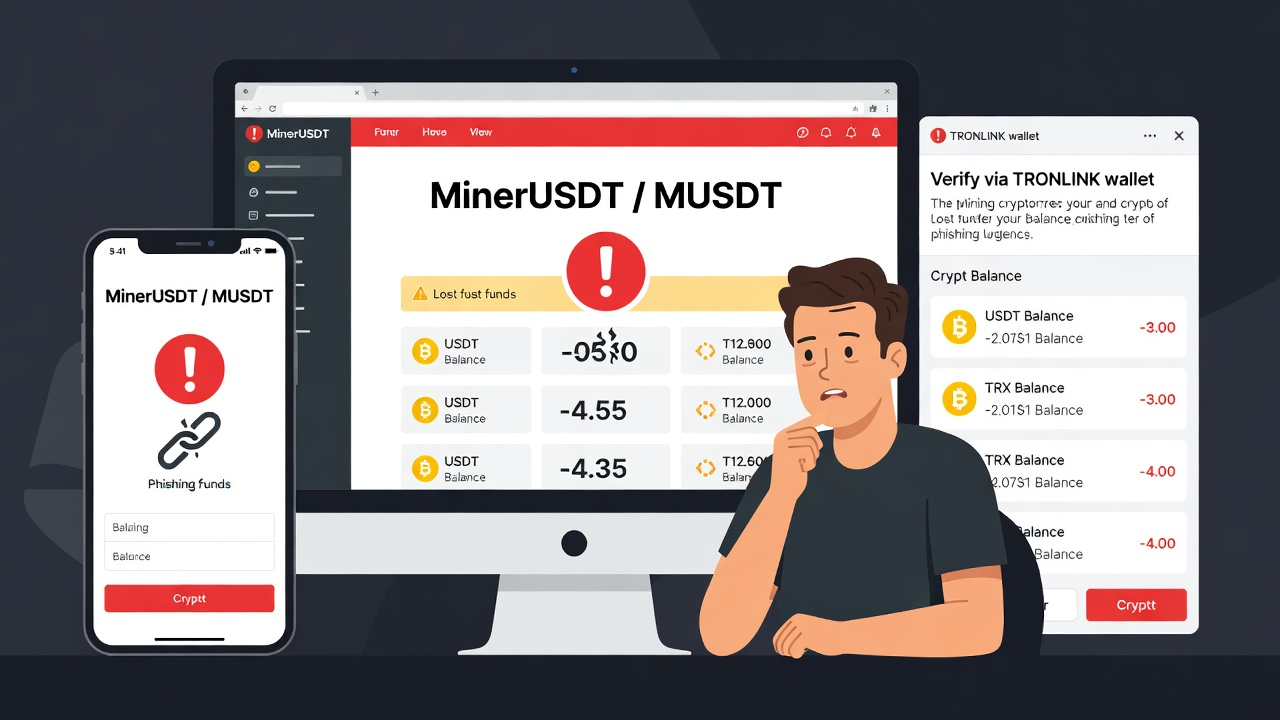
Cryptocurrency scams are becoming increasingly sophisticated, and the MinerUSDT/MUSDT platform is one of the latest examples. Promising high returns through USDT “mining,” this platform has lured users into losing substantial funds. This article provides a detailed, human-friendly overview of how MinerUSDT/MUSDT operates, its scam tactics, real user experiences, regulatory warnings, and practical recommendations to prevent further losses.
1. Background and User Experiences
MinerUSDT (also referred to as MUSDT) operates under domains like miner-usdt.com, minerusdt.io, and musdt.cc. The platform falsely markets itself as a USDT mining service offering daily profits.
Users report a common pattern:
- Initial Attraction: Small, early withdrawals create trust. Many users are drawn in by promises of 1–3% daily returns.
- Escalation Tactics: Once users are engaged, the platform pressures them to make “double investments” or additional deposits for upgrades, fees, or taxes.
- Withdrawal Shutdown: Eventually, withdrawals are blocked, leaving users unable to access their funds.
This behavior mirrors classic Ponzi schemes, where early investors are paid with new deposits to give an illusion of legitimacy. Importantly, USDT cannot be mined—it is a stablecoin issued by Tether. Thus, any platform claiming “USDT mining” is inherently fraudulent.
2. Platform Overview and Legitimacy Check
MinerUSDT/MUSDT lacks proper registration and regulatory oversight. It is promoted through websites, apps (some removed from Google Play), Telegram, WhatsApp, and other social channels.
Key details:
- Domains & Variants: miner-usdt.com, minerusdt.io, musdt.cc, usdt-mining.com.
- Operational Model: Users deposit USDT via TRC-20 or ERC-20 networks for supposed liquidity mining or staking. Initial small returns are paid using Ponzi mechanics. Larger withdrawals are blocked or require extra fees.
- Red Flags:
- No verified ownership or team details.
- Low trust scores (e.g., 33/100 on ScamAdviser for minerusdt.io).
- Not licensed with SEC (US), FCA (UK), ASIC (Australia), or SECP (Pakistan).
- Technical impossibility: USDT is not mineable.
Some related tokens, such as $MUSDT, are often pump-and-dump scams on decentralized exchanges, misleading users into thinking they are investing in legitimate Tether-backed products.
3. Scam Mechanics and Phases
The MinerUSDT scam follows predictable stages:
- Attraction: High-yield ads and referral schemes entice users.
- Trust-Building: Small withdrawals encourage users to invest more.
- Coercion: Users are asked for extra fees, taxes, or upgrades, sometimes up to 2,500 USDT.
- Lockout: Withdrawals are frozen under false pretenses like “system maintenance” or “verification required.”
- Escalation: Emails and messages push users to share wallet access or make additional deposits.
Globally, these scams have caused losses exceeding $70 million since 2019, primarily targeting emerging markets like Pakistan, India, and parts of the US.
4. Analysis of the Recent Phishing Email
A user received an email claiming a “system upgrade” for better security:
“All withdrawal-related processes on the platform will now be processed through TRONLINK wallet. Users must complete verification through TRONLINK before withdrawals.”
Key Issues:
- Phishing Tactic: By requiring TRONLINK verification, scammers trick users into signing malicious transactions or approving unlimited transfers.
- Urgency & False Legitimacy: Phrases like “effective from the date of this notice” create pressure, while references to “standardization” mimic real platforms.
- Wallet Exploitation: TRON-based USDT is targeted. Signing malicious smart contracts can drain funds.
Next Steps in Scam: Users may be asked for seed phrases, small “fees,” or sent links to fake dApps—common in crypto wallet phishing schemes.
5. User Reviews and Victim Reports
Aggregated reviews highlight a consistent pattern:
| Source | Average Rating | Common Complaints | Sample Quotes |
|---|---|---|---|
| Trustpilot | 2.3–5/5 | Withdrawal fees, account blocks | “BIG SCAM… took all my money and blocked me.” |
| Reddit (r/eth_liquidity_scam) | N/A | Demands for high fees (2.5K USDT) | “Asking 2.5K USDT… I know this isn’t right.” |
| Google Play / Quora / YouTube | N/A | Fake mining apps | “Miner USDT is a scam… doesn’t pay back.” |
| X (Twitter) | N/A | Pump & rug discussions | Warnings on “minerusdt scam” posts |
Victims often lose between $100–$10,000+ with extremely low recovery rates.
6. Regulatory Warnings
- ASIC, ScamAdviser, GridinSoft: Flagged MinerUSDT as unlicensed and suspicious.
- FBI, FTC, DFPI: Issued alerts on liquidity mining scams and TRON wallet phishing.
- 2025–2026 Trends: TRON-specific wallet exploits and USDT scams are rising, appearing in updated global scam databases.
7. Conclusion and Recommendations
MinerUSDT/MUSDT is a confirmed crypto scam, transitioning from Ponzi-style investment coercion to wallet hijacking via phishing emails. With millions lost globally, caution is essential.
Recommended Actions:
- Avoid Interaction: Do not verify addresses via TRONLINK or respond to scam emails.
- Secure Wallets: Create new wallets and transfer existing funds carefully.
- Report Fraud:
- In Pakistan: FIA Cyber Crime Wing or SECP.
- Internationally: IC3.gov or local authorities.
- Provide email headers, transaction IDs, and wallet addresses.
- Prevention: Use reputable exchanges like Binance, verify addresses on Tronscan.io, and ignore unsolicited upgrade requests.
- Recovery Options: Blockchain forensics firms may help, but focus primarily on education to prevent future losses.
Final Note
Crypto scams like MinerUSDT/MUSDT highlight the need for vigilance in digital asset investments. Always verify platforms, research regulatory status, and protect wallet credentials. Sharing awareness, especially in emerging markets, is crucial to reduce the impact of these evolving scams.