
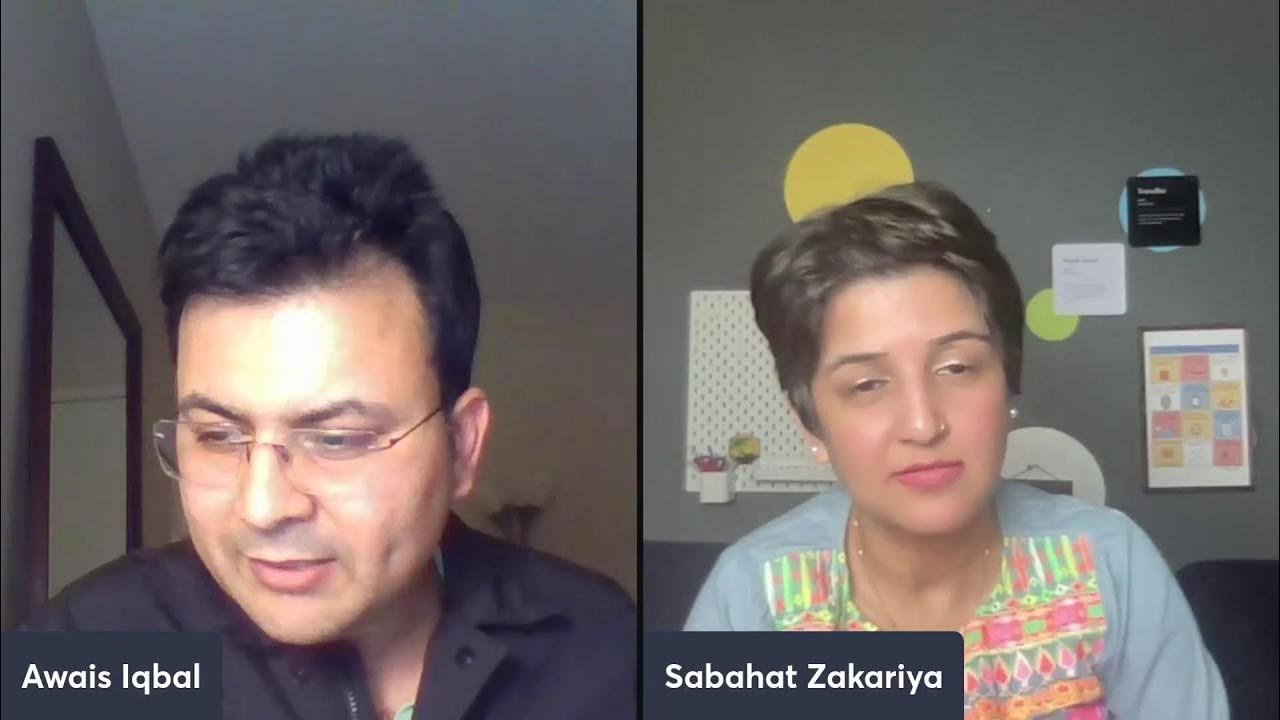
In recent years, Awais Iqbal has emerged as one of the most visible and controversial Pakistani ex-Muslim atheist voices on the internet. Known for his direct criticism of Islam and organized religion, Iqbal’s journey—from a deeply religious upbringing in Pakistan to outspoken atheism in the United States—reflects a wider but often hidden movement of skepticism in conservative Muslim societies.
His story is not just about belief or disbelief. It is about identity, freedom of expression, personal risk, and digital-age dissent.
Early Life and Religious Background
Awais Iqbal was born in Pakistan into a religiously observant Muslim family. His upbringing was firmly rooted in Islamic tradition:
- His father followed the Ahl-e-Hadith school of thought and performed Hajj and Umrah
- His mother practiced Islam in a more moderate way
- Religion played a central role in family life and education
From an early age, Iqbal did not merely follow Islam passively. By his own accounts, he actively practiced and taught Islamic beliefs, influencing others and participating deeply in religious life.
This background later became central to his public identity, as he often emphasizes that his criticism of Islam comes from inside knowledge, not external hostility.
Education, Journalism, and Media Career
Before becoming a public atheist activist, Awais Iqbal worked as a journalist and news anchor in Pakistan. This professional experience shaped:
- His debating style
- His ability to communicate complex ideas to large audiences
- His understanding of media narratives and public perception
Over time, he expanded his identity beyond journalism, describing himself as:
- Poet
- Writer
- Historian
- Public speaker
- Broadcaster
His media skills later became a powerful tool in spreading atheist and secular ideas online.
From Devout Muslim to Atheist: Ideological Transformation
Initial Faith and Internal Conflict
In his own descriptions, Iqbal refers to his earlier self as a strict and deeply committed Muslim. He performed religious rituals and actively defended Islamic doctrine.
However, over time, he began questioning:
- The historical accuracy of the Quran
- The prophetic narratives
- The concept of divine revelation
- The role of religion in controlling societies
These doubts were not sudden. They developed gradually through reading, historical inquiry, and philosophical reasoning.
Leaving Islam
Awais Iqbal publicly left Islam at a very young age—around 19 years old, according to his statements. He framed his decision as an outcome of rational inquiry, not emotional rebellion.
He has repeatedly described religion as:
“A man-made system designed for control, not truth.”
This public rejection of Islam placed him in serious danger inside Pakistan, where apostasy and religious criticism can lead to threats, harassment, or worse.
Relocation to the United States
By around 2023, escalating threats forced Iqbal to relocate to the United States, settling in Chicago, Illinois. This move marked a turning point:
- He gained physical safety
- He expanded his online presence
- His content became more frequent and explicit
Living outside Pakistan allowed him to speak openly in ways that would have been impossible back home.
Public Atheist Identity and Beliefs
By 2023–2024, Awais Iqbal openly identified as an atheist. His worldview is characterized by:
- Rejection of all organized religions (Islam, Christianity, Judaism)
- Emphasis on rationalism, skepticism, and historical criticism
- Opposition to religious nationalism and theocratic politics
He frequently argues that former believers often understand religion more deeply than practicing followers, due to critical engagement rather than faith-based acceptance.
Rumors of Reversion and Clarification (2025–2026)
In late 2025, online rumors surfaced claiming that Awais Iqbal had returned to Islam. These claims circulated on some blogs and social media pages.
However:
- No verified statement from Iqbal supported these claims
- His January 2026 broadcasts continued explicitly atheist themes
- Programs titled “Exposing Islam” and “Answering a Muslim Mind” confirmed his stance
Based on available evidence, the reversion reports appear unsubstantiated or fabricated.
Social Media Presence and Digital Platforms
Awais Iqbal’s influence is primarily digital. His platforms include:
X (Twitter)
- Handle: @IqAwais
- Over 28,000 followers
- Bio openly states: Atheist. Poet. Writer. Historian. Public Speaker & Broadcaster
- Posts include satire, religious critique, and political commentary
- Page: Awais Iqbal (@AwaisIqbal666)
- Nearly 40,000 followers
- Features long-form live streams and ideological discussions
YouTube
- Original channel “AwaisIqbal_Opinion” was hijacked and deleted in January 2026
- New channel “AwaisIqbal_Defiance” launched immediately
- Content focuses on atheism, religious criticism, and philosophy
Despite platform disruptions, his audience followed him across accounts, showing strong viewer loyalty.
Major Debates and Public Discussions
Awais Iqbal is especially known for live debates with religious scholars and theists.
Notable Debate Topics:
- Existence of God
- Nature of revelation
- Quranic contradictions
- Women’s rights in Islam
- Religion and political power
Prominent Opponents:
- Mufti Yasir Nadeem Al Wajidi
- Hasan Allahyari
- Dr. Muhammad Sufyan
- Maulana Kumail Mehdavi
- Saad Khan
Among atheist and ex-Muslim audiences, Iqbal is often viewed as a strong debater, while critics accuse him of provocation and disrespect.
Risks, Backlash, and Pakistani Context
In Pakistan, atheism itself is often tolerated quietly, but public criticism of Islam is not. Iqbal’s case highlights this distinction.
- Online threats are common
- Blasphemy accusations carry severe consequences
- Even abroad, activists face harassment
Discussions online suggest hundreds of thousands of Pakistanis privately identify as atheists or ex-Muslims, yet few speak openly due to fear.
Influence and Cultural Impact
Awais Iqbal’s influence goes beyond numbers:
- Followers report leaving religion after engaging with his content
- Muslim apologists frequently respond to his arguments
- His debates spark broader conversations on belief, identity, and freedom
He represents a new digital-era atheist movement, where dissent no longer requires traditional institutions—only an internet connection.
Recent Developments (January 2026)
As of January 2026:
- His YouTube presence continues under a new channel
- He remains openly atheist
- His content mixes religious critique with political analysis
- He shows no indication of retreating from public discourse
Despite controversy, Awais Iqbal continues to frame his work as a fight for reason over faith.
Conclusion: A Symbol of Digital Dissent
Awais Iqbal’s journey—from devout Muslim to outspoken atheist—captures the tension between tradition and modern skepticism in conservative societies. Whether viewed as a courageous rationalist or a provocative critic, his impact is undeniable.
In a region where silence is often safer than speech, his voice represents a growing, if controversial, demand for intellectual freedom and open inquiry.